
Of all the lines on a pesticide label, the pre-harvest interval is the one that gets ignored the longest and remembered the most expensively. Everything else on the label governs how well the product works; the PHI governs whether the harvested crop can be sold at all. For growers supplying domestic shelves it is a compliance line. For growers and exporters feeding international supply chains — where consignments are tested against destination MRLs — it is the difference between a passed shipment and a rejected container.
What the Pre-Harvest Interval Is
The pre-harvest interval (PHI) is the minimum number of days that must pass between the last application of a pesticide and the harvest of the crop. Its logic is residue decline: after spraying, the active ingredient and its breakdown products degrade, and the label’s rate, dose and PHI are calibrated together so that by the time the interval has elapsed, residues on the treated crop sit at or below the level the registration supports. Spray again inside the interval — or spray late past the label rate to “catch up” — and the decline curve no longer ends where the label says it does.
PHI is not a suggestion appended to the label; it is part of the use pattern. A product applied outside its stated interval is, from the label’s point of view, not the registered use at all.
Why PHI Decides Export Outcomes
Destination markets test incoming produce against their own maximum residue limits (MRLs). A consignment above an MRL faces the consequences importing countries attach to that failure — rejection, destruction, delisting of the supplier — and the costs land on everyone in the chain. The PHI is the practical tool that manages residue decline toward those limits:
- Every destination market maintains its own MRL list, product by product, crop by crop. Importers should know the list for their market and choose products — and PHIs — accordingly.
- A longer PHI generally means more time for residues to decline, so harvest planning is itself a residue-management decision.
- Residue testing is applied at the destination, after the voyage — which means the PHI decision was locked in months earlier, at spray time.
The wider registration context matters here too: a Chinese registration authorizes the product in China, not in the destination market — the two systems are mapped in the destination-market registration guide. For the labels themselves, the pesticide label reading guide walks through every element the label carries.
How Chinese Labels State It
Chinese pesticide labels state the PHI directly, as the pre-harvest interval line, crop by crop. A product registered on several crops carries a PHI for each, and the intervals can differ — the residue decline that matters is specific to the crop and its harvestable part. The PHI appears alongside the other use-pattern elements: registered crop and pest, rate, dilution, application method and number of treatments. When reading a label, treat the PHI line as the last item to check and the first to plan from.
Planning the Last Spray Backwards
Because harvest dates are known long before spray programs are finalized, the PHI is best read in reverse. The discipline is simple: start at the harvest date, count back the label PHI, and the last permissible application date falls out immediately. If the crop still needs protection after that date, the answer is a product whose PHI fits the remaining window — not a stretch of the current one.
A Backward-Planning Example
| Step | Date | Note |
|---|---|---|
| Planned harvest | Day 100 | Market-driven, known in advance |
| Label PHI for this crop | 21 days (illustrative) | Read from the product label |
| Last permissible spray | Day 79 | Day 100 minus 21 |
| Latest spray actually planned | Day 75 | A margin for weather and logistics (general practice) |
The illustrative 21 days stands for whatever the label of the product in hand states — the arithmetic is the point, not the number. Building that margin into the plan is general good practice: harvest dates move, and a spray schedule with no slack converts a one-day delay into a compliance problem.
PHI Inside the Season Program
A full-season crop program is where PHI planning either happens or fails to happen. Programs that fix product, timing and rate for every round — like the wheat sequence behind the kit below — should carry one extra line: the PHI of each product, checked against the expected harvest window. That single line does three jobs at once:
- It prevents late sprays that would strand the grower inside an interval at harvest time.
- It shapes product choice in the closing rounds, favouring options whose PHIs fit the calendar.
- It aligns the program with the destination market’s MRL expectations before the crop leaves the field, not at the port.
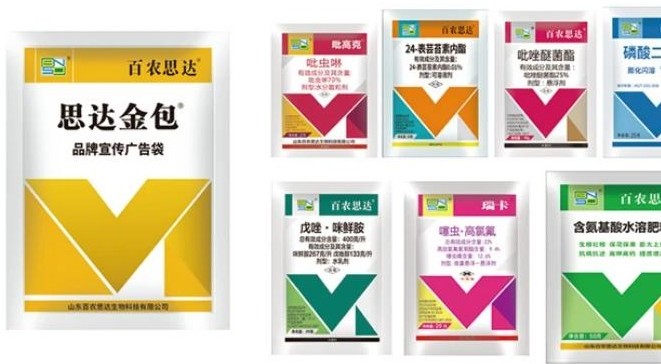
For growers and distributors building these programs, BNSD Agro (Shandong Bainong Sida Biotechnology Co., Ltd.) supplies full-season crop programs with label documentation for the products in them — see the product range and the wheat full-season program guide as a worked example.
FAQ
Is the PHI on a Chinese label valid in my market?
The Chinese label states the PHI used at registration in China. Your destination market applies its own MRLs and its own label requirements, and a Chinese registration does not authorize sale abroad. Use the Chinese PHI as the product’s baseline data, then confirm what your market’s regulations and registration require — that is the number that protects the shipment.
What happens if residues exceed the destination MRL?
The importing country applies its enforcement process — rejection, return or destruction, and supplier consequences such as delisting. Beyond the immediate loss, failed consignments damage the reputation of the whole supply chain. Planning the last spray around the PHI is the cheapest residue management there is.
Does the PHI differ from crop to crop?
Yes, and from label to label. Each registered crop carries its own stated interval, because residue decline depends on the crop and its harvestable part. Never carry one product’s PHI on one crop over to another crop — read the line for the crop you are actually spraying.
If it rains right after my last planned spray, can I re-spray closer to harvest?
Re-spraying restarts the interval from the new application date, which pushes the last permissible application even closer to — or past — harvest. If the window no longer fits, switch to a product whose PHI fits the remaining days. The interval is counted from the final application, whatever the reason for it.
WhatsApp / WeChat: +86 199 0636 5856