
Every legally produced pack of pesticide in China carries a standardized label, and for an importer it is the fastest verification document you will ever get: it tells you who registered the product, who is licensed to make it, what exactly is inside, and what the product is legally cleared to do. Learning to read it takes about twenty minutes and will save you from the majority of bad supplier experiences in this trade. This field guide walks through the pesticide label elements you will see on a Chinese pack, maps them to what your destination market expects, and lists the red flags that separate a real manufacturer from a repacker with a price list.
Why the Label Comes First
Documents can be emailed in from anywhere; a label is physically bound to the goods. Before you even open sample negotiations, ask a supplier for a photo of the actual product label — front and back — plus the certificate behind it. What you are about to read on that label is defined by Chinese regulation, element by element, and a professional supplier will produce it without hesitation.
The Anatomy of a Chinese Pesticide Label
| Label element | What it tells you | What to verify |
|---|---|---|
| Registration certificate number (commonly “PD…”) | The product is registered with China’s pesticide authority | It matches the registration certificate the supplier provides |
| Production licence number | The factory holds China’s statutory pesticide manufacturing licence | The licence holder is the actual plant, not a trader |
| Execution standard (GB/Q) | The quality benchmark the batch is made and released against | It appears consistently on label, COA and specification |
| Active ingredient & content + formulation code | What the product actually is — e.g. an suspension concentrate (SC), water-dispersible granule (WDG) or emulsifiable concentrate (EC) | Content matches the registration and your order specification |
| Toxicity band | The Chinese hazard classification of the product | It is consistent with the dangerous-goods class used for shipping |
| Registered crops, pests, rates, method | The uses legally approved in China | Whether these uses exist in your market’s registration |
| Pre-harvest interval (安全间隔期) | Days between last application and harvest | Useful reference for your own MRL and residue discussions |
The rest of the label carries precautions, first-aid instructions and storage guidance — read them once, because they also show you how seriously the producer takes the document as a whole.
The China pesticide registration number
The number importers ask about first is the pesticide registration certificate number, commonly prefixed “PD”. It is issued to a specific holder for a specific product — a defined active ingredient, content and formulation — and it is the single most load-bearing element on the label. If a pack shows a registration number, the supplier should be able to produce the registration certificate in the same name. When the certificate is in the manufacturer’s own name, you are dealing with a company that invested in its own registrations; that is the profile you want in a long-term supplier.
Production licence and execution standard
Two further numbers anchor the label. The pesticide production licence number confirms the producing entity is licensed to manufacture pesticides in China at all — check that it belongs to the plant, not to an intermediary. The product execution standard, prefixed GB (national standard) or Q (enterprise standard), is the benchmark the product is manufactured and released against; it should appear unchanged on the label, the certificate of analysis and the specification sheet.
Active ingredient, content and formulation code
The label states the active ingredient, its content and a formulation code — SC, WDG, wettable powder (WP), EC, oil-in-water emulsion (EW), micro-emulsion (ME), soluble concentrate (SL), aqueous solution (AS), granule (GR) and so on. This trio is what your purchase contract should mirror word for word. “Abamectin 1.8% EC” and “abamectin 5% ME” are different products with different registrations, different field performance and different prices; a label that blurs any of the three elements is a problem regardless of what the quotation says.
The toxicity band and the fine print
Chinese labels carry a colour-banded toxicity classification ranging from 微毒 (slight toxicity) and 低毒 (low toxicity) through 中等毒 (moderate toxicity) to 高毒 (high toxicity) and 剧毒 (acute toxicity). For an importer the band is a cross-check: it should be consistent with the hazard profile of the active ingredient and with the dangerous-goods classification your forwarder uses when booking freight. The lower half of the label — registered crops and target pests with dilution rates and application method, the pre-harvest interval (安全间隔期), precautions and first aid — doubles as a free technical datasheet for the product’s intended use pattern.
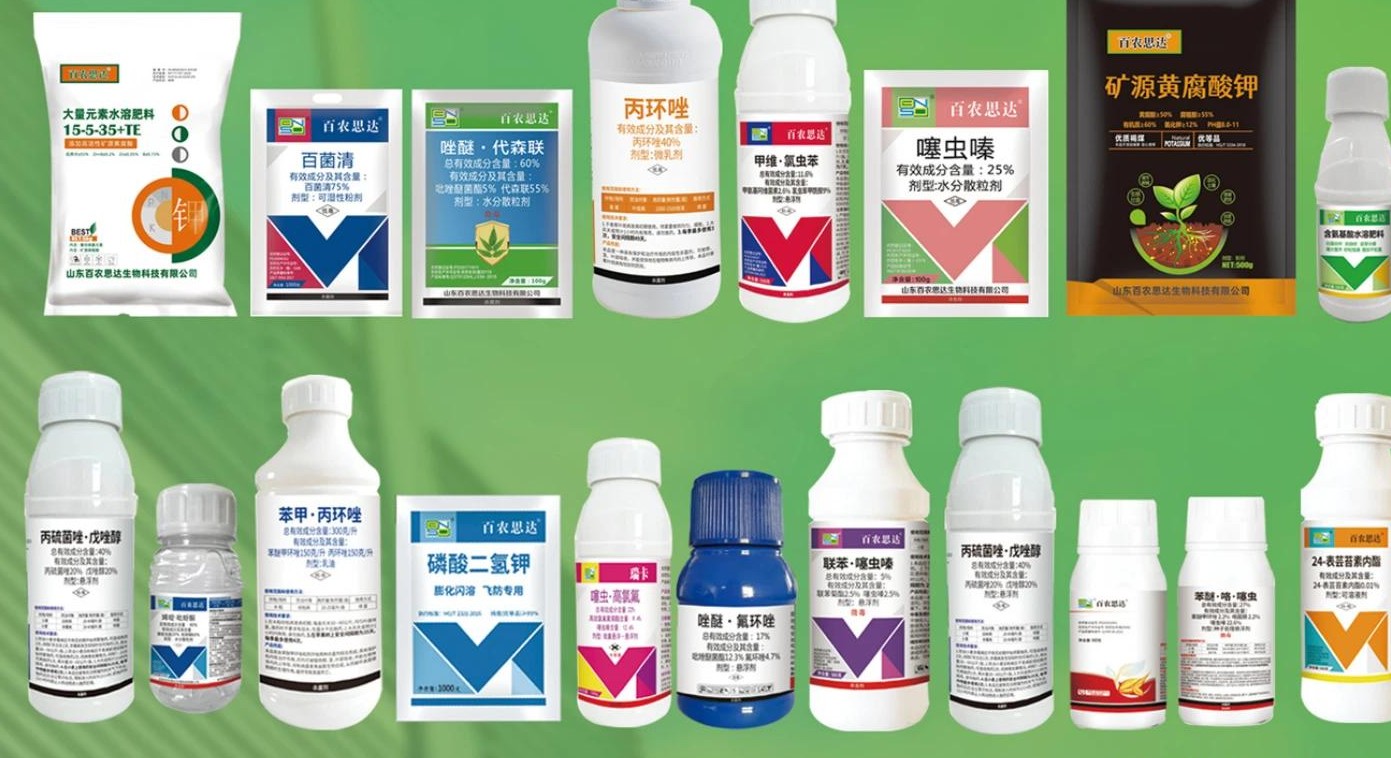
Mapping the Chinese Label to Your Destination Market
Here is the point importers get wrong most often: a Chinese registration authorizes sale in China, and nothing beyond it. Your destination market requires its own registration number on the pack — an EPA reg. no. in the United States, or the equivalent in your own jurisdiction — obtained separately, usually by you, the importer of record.
So treat the two label layers differently:
- The Chinese label is your technical and verification reference. It proves the product is registered at source, shows the true content and formulation, and documents the use pattern the manufacturer designed the product for.
- Your destination-market label is the sales document. Language, claim wording, use rates and registration numbering on the pack you actually sell are governed by your local registration and local label law.
For OEM and private-label orders, the manufacturer produces against your registered artwork; the Chinese label elements above then live on the export documentation and the certificate set rather than on the retail pack.
Red Flags When Evaluating a Supplier
Reading labels across several candidate suppliers quickly reveals who is worth your audit budget. Watch for:
- Missing or mismatched certificate numbers. A label number that does not match the certificate copy, a certificate held in a different company’s name, or refusal to share either — walk away.
- Content not matching the registration. If the registered content on the certificate differs from what the label or the quotation offers, the product cannot be released legally as registered. Registered content is what ships.
- Vague “or higher” content claims. “Content: 25% or higher” is not a specification. Real manufacturers state exact contents that match their registrations; loose phrasing usually signals a blender buying whatever is cheapest that week.
None of these checks requires a lab — only the label, the certificate and ten minutes of comparison.
How BNSD Agro Handles Labels and Registrations
Shandong Bainong Sida Biotechnology Co., Ltd. (BNSD Agro), founded in 2003 in Qingzhou, Weifang, holds 70 ICAMA registrations with a further 60 pending, and certificate numbers are available on request for every product in the export portfolio — fungicides, insecticides and acaricides, herbicides, granules and plant nutrition. Labels are produced to registered artwork with batch coding, so the pack you receive matches the certificate, the COA and the production record. For buyers building their own destination-market dossiers, the registration and documentation support available through OEM cooperation covers the technical data and samples you will need.
Frequently Asked Questions
What does the “PD” prefix on a China pesticide registration number mean?
The pesticide registration certificate number printed on a Chinese label is commonly prefixed “PD”. It identifies a product-specific registration held by a named holder. Ask the supplier for the registration certificate in the same name and check that the content and formulation on it match the label — a consistent set is the hallmark of a genuine manufacturer.
Does a Chinese registration number let me sell the product in my country?
No. Chinese registration authorizes sale in China only. Your destination market requires its own registration — for example an EPA reg. no. in the United States — obtained separately, normally by the importer of record. Use the Chinese label as a technical reference, not as market authorization.
Which pesticide label elements should I check first on samples?
The registration certificate number, the production licence number and the active ingredient, content and formulation code. Together they answer who registered the product, who is licensed to make it and what is actually inside — the three questions behind most sourcing failures.
The label content and the COA do not match. What now?
Treat it as a stop-shipment signal. Compare the batch number and production date, keep the retention samples sealed, and put the discrepancy in writing to the supplier with photos of the label and COA. A manufacturer with batch-level traceability can resolve it quickly; a seller who cannot should not be in your supply chain.
WhatsApp / WeChat: +86 199 0636 5856