
Peanuts are an underground crop, and that simple fact shapes the whole protection program. The yield sits in the soil, out of sight, where larvae can tunnel through roots and pods for weeks before the damage becomes visible above ground. And because the pods fill late in the season, nutrition timing decides kernel weight and oil content as much as any single input. This peanut growing guide builds the season around two anchors: white grub control at planting and pod-fill nutrition — see the granule product line that carries the first anchor.
Why Soil Pests Decide the Peanut Season
White grubs — the soil-dwelling larvae of scarab beetles — are the defining soil pest of peanut in most growing regions. The larvae feed on roots, gynophores and developing pods; the crop often looks healthy above ground until plants loosen, yellow, or pull out of the ground with pod damage at lifting. By the time symptoms appear, the feeding has already happened. That is why peanut white grub control is a planting-time decision, not a mid-season rescue: once larvae are established beside the pods, no spray reaches them.
Secondary soil pressures — wireworms, cutworms and root-feeding caterpillars — share the same logic: they live where foliar sprays cannot follow. A granular insecticide-fertilizer applied at planting puts the active ingredient into the root zone for the whole early season.
The Season at a Glance
| Stage | Focus | Tool in the program |
|---|---|---|
| Before planting | field selection, rotation planning | non-host rotation, residue management (general agronomy) |
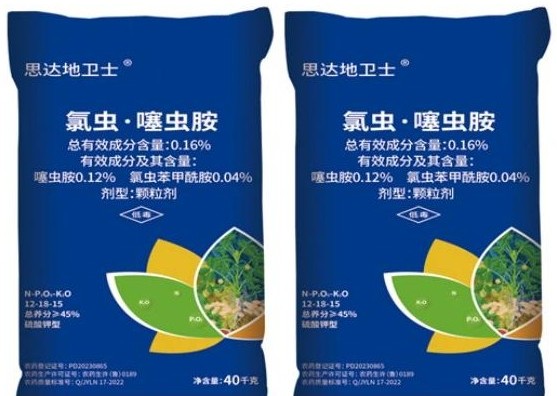
| At planting | white grubs and early soil pests | 0.16% chlorantraniliprole + clothianidin GR, NPK 12-18-15 sulphate base |
| Vegetative growth | monitoring, sanitation | scouting, keep fields free of beetle-attracting debris (general) |
| Flowering to pod set | gynophore and pod support | balanced nutrition, moisture management (general) |
| Pod fill | kernel weight, oil build-up | MKP foliar spray 0.2–0.3% |
At Planting: White Grub Control in the Fertilizer Bag
The anchor product from BNSD Agro (Shandong Bainong Sida Biotechnology Co., Ltd.) is an insecticide-fertilizer granule: 0.16% chlorantraniliprole + clothianidin GR on an NPK 12-18-15 sulphate base, packed in 40 kg bags (Chinese registration: peanut, white grubs). One product covers two jobs at the moment the crop is most vulnerable:
- Chlorantraniliprole (IRAC group 28, diamide) — a lepidoptera- and soil-pest-active class with low application rates per hectare.
- Clothianidin (IRAC group 4A, neonicotinoid) — systemic activity against soil-dwelling sucking and chewing pests.
- NPK 12-18-15 sulphate base — a phosphorus-forward, sulphate-based analysis matched to peanut’s early root development and pod-zone nutrition.
Because the active ingredients ride on the fertilizer prill, the application is simply the normal basal dressing at planting — no extra pass, no separate equipment. For a distributor, this is a clean story to carry: one 40 kg bag replaces a fertilizer order plus an insecticide order for the same operation. The wider granule and mediated-fertilizer range is covered in our pesticide-fertilizer granule buyer’s guide.
Mid-Season: Rotation and Sanitation Notes
Chemistry at planting works best inside a clean agronomic frame. Three well-established practices reduce soil-pest pressure year over year:
- Rotate away from host crops. Continuous peanut (or peanut following other scarab hosts such as turf, maize or potato in the same rotation) builds grub populations; a non-host cereal break starves them.
- Manage residues and volunteers. Old root systems and crop debris shelter egg-laying adults; clean field margins reduce re-infestation from adjacent ground.
- Time field operations with the beetle cycle. Where adult beetle flights are monitored locally, deep soil preparation windows can expose larvae and pupae to predators and weather.
None of this replaces the planting-time granule — but each practice lowers the population the granule has to suppress, which is how a program stays effective season after season.
Pod Fill: MKP Foliar Nutrition at 0.2–0.3%
Peanuts set their pods underground after flowering, and the final kernel weight is built in the last weeks before lifting. This pod-fill window is where foliar mono-potassium phosphate (MKP) earns its place in a peanut fertilizer program:
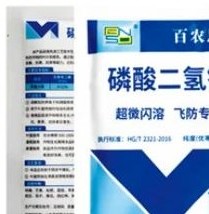
- Analysis 0-52-34 — P₂O₅ ≥ 52%, K₂O ≥ 34% (company product information), with no nitrogen to delay senescence management.
- Foliar rate 0.2–0.3% — a standard foliar solution concentration; apply at flowering, pod set and pod fill per the nutrition plan.
- Flash-soluble, UAV-grade formulation — dissolves quickly for knapsack and drone application alike.
- Packs 50 g × 200, 500 g × 20, 1 kg × 10 — from single-plot sachets to spray-service formats.
Potassium drives carbohydrate transport into the developing pod; phosphorus supports energy transfer through grain and oil build-up. Foliar delivery at 0.2–0.3% puts both directly into the leaf during the window when root uptake alone may lag demand. For the broader context of foliar phosphate and potassium products, see the nutrition range and our NPK water-soluble fertilizer guide.
Assembling the Program for Your Market
The peanut program is deliberately short — two anchors and a set of rotation practices — which makes it one of the easiest crop programs to localize. The registration work concentrates on a single granule SKU and one fertilizer registration, and the grower-facing story fits on one page: control the grubs when you fertilize, feed the pods when they fill.
Rates for both anchors follow the Chinese registration labels cited above; the destination market’s own label and registration status always govern final recommendations. For samples, registration dossiers or a program tailored to your destination market, message the export team.
FAQ
When do white grubs actually damage the peanut crop?
Larvae feed on roots and developing pods throughout the season, but visible damage — loose plants, empty or tunneled pods — usually appears at mid-season or lifting. Because the feeding happens underground and out of sight, control must be placed in the root zone at planting rather than sprayed after symptoms show.
Is the 0.16% GR product a fertilizer or an insecticide?
Both. It is an insecticide-fertilizer mediated product: the active ingredients (chlorantraniliprole + clothianidin, 0.16%) are carried on an NPK 12-18-15 sulphate fertilizer prill, so the basal dressing and the soil-pest treatment are one operation. The Chinese registration for this product is peanut white grubs.
What concentration of MKP should be used for pod fill?
The standard foliar working concentration is 0.2–0.3% MKP solution, applied at flowering, pod set and pod fill. Always confirm the exact rate, water volume and spray frequency against the label of the destination market.
Can the granule and the MKP spray be used in the same season?
Yes — they target different stages. The granule is applied once at planting for soil-pest control on the fertilizer base; MKP is a foliar nutrition spray from flowering onward. They never need to be mixed in the same tank.
To discuss a peanut program for your market or request samples, message the export team.
WhatsApp / WeChat: +86 199 0636 5856