
Rice damage in a single season rarely comes from one pest. Leaf blast flares in wet, overcast spells, sheath blight builds as the canopy closes, planthoppers concentrate toward heading, and leaffolders or stem borers arrive on the late flush. A rice pest control program that assigns a product to each stage is easier to budget, easier to train and easier to sell than a chain of emergency sprays — which is why buyers and technical distributors should read the season as one plan, not five separate purchases.
This guide lays out the program stage by stage — seedling, tillering, booting, heading and grain fill — using products and rates as they appear on Chinese registration labels. Two framing rules apply throughout. First, the rates quoted are Chinese label rates expressed per 667 m² (mu, about one-fifteenth of a hectare); they describe how the products are positioned in China, not a universal dose. Second, in any export market the destination-market label governs: Chinese registration does not authorize use elsewhere, and crops, rates and pre-harvest intervals must follow the local label. For destination-specific documentation, contact us.
Stage 1: Seedbed — Start Clean Against Damping-Off
Seedling losses begin before the field does. Damping-off and seedling blight thrive in wet, crowded seedbeds, and the damage carries straight into transplanting. The standard Chinese seedbed treatment is metalaxyl + hymexazol 30% aqueous solution (AS) at 1.2–1.5 g/m², applied to the seedbed to carry seedlings through the nursery stage. Even, well-protected seedlings transplant better and start the main season with a lower disease base.
Stage 2: Tillering — Blast and Sheath Blight
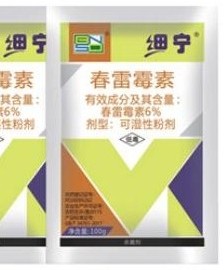
Leaf blast shows first as eye-shaped lesions on the leaf blade during warm, humid, overcast spells. The antibiotic kasugamycin is the reference rice blast fungicide in Chinese programs: kasugamycin 6% wettable powder (WP) at 40–50 g/667 m², or kasugamycin-HCl 6% soluble concentrate (SL) at 40–50 mL/667 m². Scouting from mid-tillering onward decides whether a pass is preventive or corrective — both timings sit on the label.
As the canopy closes, sheath blight climbs from the water line. Difenoconazole + propiconazole 300 g/L emulsifiable concentrate (EC) at 20–25 mL/667 m² is the standard triazole (FRAC 3) combination for it, and the same pass adds support against other foliar diseases.
Stage 3: Booting to Heading — Planthoppers Take Over
Planthopper pressure peaks as the crop runs toward heading. Heavy infestation causes hopper burn — the scorched patches that can collapse a field within days — and in some regions the insects also vector virus diseases. A rice planthopper insecticide rotation is therefore built into the program rather than improvised:
- Thiamethoxam 25% water-dispersible granule (WDG), 3–8 g/667 m² — a neonicotinoid (IRAC 4A) with fast uptake;
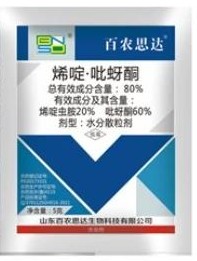
- Nitenpyram + pymetrozine 80% WDG, 7.5–10 g/667 m² — a two-mode mix pairing a neonicotinoid (IRAC 4A) with a feeding blocker (IRAC 9A), suited to rising or mixed pressure;
- Imidacloprid 10% WP, 20–40 g/667 m² — the long-standing 4A baseline.
Water volume matters as much as the product here: planthoppers sit low in the canopy, so the spray has to reach the base of the clumps.
Stage 4: Heading to Grain Fill — Leaffolders and Stem Borers
From heading onward the leaf-feeding complex — leaffolders and, in many regions, stem borers — becomes the main threat to grain fill. The diamide chlorantraniliprole 200 g/L suspension concentrate (SC) at 7–10 mL/667 m² (IRAC 28) is the backbone option against chewing larvae. Rotation and combination options include:
- Emamectin + indoxacarb 9% SC, 10–20 g/667 m² — IRAC 6 + 22A in one pass;
- Abamectin 5% micro-emulsion (ME), 8–16 mL/667 m² — the classic IRAC 6 leaf-feeder option;
- Bt (Bacillus thuringiensis) 16000 IU WP, 100–150 g/667 m² — the microbial option where residue profiles or export protocols demand it.
The Season at a Glance
| Stage | Main pests | Product (example) | Chinese label rate |
|---|---|---|---|
| Seedbed | damping-off, seedling blight | metalaxyl + hymexazol 30% AS | 1.2–1.5 g/m² seedbed treatment |
| Tillering | leaf blast; sheath blight | kasugamycin 6% WP; difenoconazole + propiconazole 300 g/L EC | 40–50 g/667 m²; 20–25 mL/667 m² |
| Booting–heading | planthoppers | thiamethoxam 25% WDG; nitenpyram + pymetrozine 80% WDG | 3–8 g/667 m²; 7.5–10 g/667 m² |
| Heading | panicle and neck blast; planthoppers | kasugamycin-HCl 6% SL; imidacloprid 10% WP | 40–50 mL/667 m²; 20–40 g/667 m² |
| Grain fill | leaffolder, stem borers; planthopper rebound | chlorantraniliprole 200 g/L SC; abamectin 5% ME | 7–10 mL/667 m²; 8–16 mL/667 m² |
All rates are Chinese registration label rates; the destination-market label is authoritative in your market.
Rotation Is Not Optional
The insect side of this program draws on four mode-of-action families — neonicotinoids (IRAC 4A), feeding blockers (IRAC 9A), diamides (IRAC 28) and avermectins (IRAC 6) — and the working rule is not to run the same group back-to-back against the same pest within a season. Rotate between 4A and 9A on planthoppers, and between the 28, 6 and 22A options on leaffolders and borers. The same discipline applies on the fungicide side, where kasugamycin passes should not simply repeat at every timing. Follow the resistance-management guidance and the pre-harvest interval stated on the destination label.
What This Means for Buyers and Distributors
An import portfolio that supports a rice season needs, at minimum, a blast active, a sheath-blight triazole, at least two planthopper modes and a leaffolder/borer set — backed by clean documentation. BNSD Agro (Shandong Bainong Sida Biotechnology Co., Ltd.) is a national-designated pesticide manufacturer founded in 2003 in Qingzhou, Weifang, Shandong, listing a 99-SKU export portfolio — 25 fungicides and 43 insecticides and acaricides among them — with ISO 9001/14001/45001 certification, HPLC/GC batch release and an automated high-rack warehouse (company information). Where a rice program needs different packs or formulations, OEM covers eight-plus formulation types in packs from 10 mL to 40 kg, shipped FOB or CIF with T/T 50% advance and third-party or buyer inspection accepted (company information).
Browse the rice-relevant fungicides and insecticides and acaricides to match the program, or contact the export team for specifications and samples.
Frequently Asked Questions
Can one spray cover blast, sheath blight and planthoppers at heading?
Yes — that is the purpose of the heading pass. A tank mix of a kasugamycin product for blast, a triazole for sheath blight and a planthopper insecticide covers the window in one operation, provided the mix is jar-tested first and applied promptly. Exact tank partners and rates follow the destination-market label.
How many sprays does a full rice season need?
Programs in the four-to-six range are typical in China — a seedbed treatment, one or two tillering passes, a heading pass and a grain-fill pass — but the count depends on pressure, region and market. Local scouting and the destination label decide.
Can the planthopper and leaffolder sprays be combined?
Usually yes, and it is common practice in late heading. Keep one neonicotinoid or feeding-blocker mode for planthoppers and one diamide or avermectin mode for the leaf-feeders, jar-test the combined mix and respect the label restrictions of both products.
What should an importer verify before quoting a rice program?
The registration certificate numbers and content on the Chinese label, the destination-market registration status of each active, pack sizes and label language, and the manufacturer’s batch COA practice. Suppliers who produce certificate numbers on request are the baseline; the verification steps walk through the rest.
To build a rice program for your market, message the export team.
WhatsApp / WeChat: +86 199 0636 5856