
China plays a central role in global crop-protection supply, and the practical question for most importers is not whether to buy Chinese but whom to buy from. Between a genuine manufacturer and your purchase order lies a full spectrum of intermediaries, and the risks are specific: a middleman reselling another plant’s drums, or worse, a factory selling against a production licence or registration it does not actually hold — the practice known as certificate leasing. This pesticide factory audit checklist sets out twelve verifications that separate a real, accountable manufacturer from everyone else.
Why Verification Matters
Two failure patterns dominate importer losses. The first is discovering, usually after a quality problem, that your supplier never made the product: QC, traceability and claims all collapse when there is no factory to hold accountable. The second is certificate leasing, where a plant “borrows” another company’s production licence or registration certificate to move product it is not licensed to make. The goods may even be sound, but the paper chain breaks at exactly the moment regulators, insurers or courts ask who is responsible. Both patterns are avoidable with structured due diligence before the first order — and both are invisible in a price list.
The 12-Point Checklist
1. Business Licence and Business Scope
Ask for the business licence and verify it against China’s national enterprise credit information system, which is public. The registered business scope must cover pesticide production, the registered capital should be plausible for the volumes you plan, and the registered address should match the factory address you expect to audit.
2. Pesticide Production Licence
Pesticide manufacturing in China requires a production licence under the country’s pesticide management regulations. Request a copy and check that the licensed scope actually covers the products you are buying — a formulation licence does not cover synthesis, and vice versa. Note the licence holder’s name: it must be the company signing your contract.
3. Product Registration Certificates
Every product needs registration with ICAMA, the institute that controls agrochemicals under China’s Ministry of Agriculture and Rural Affairs. Match four elements: product name, active-ingredient content, formulation type and certificate holder — and confirm the holder is the factory selling to you, not an unrelated third party. As a scale reference, BNSD Agro states it holds 70 ICAMA registrations with around 60 more pending, built on 114 original registrations across 46 categories (company information).
4. ISO 9001 / 14001 / 45001 Certification
Quality management (ISO 9001), environmental management (ISO 14001) and occupational health and safety (ISO 45001) certificates indicate a plant that runs on documented, audited processes rather than improvisation. Check the certificate numbers and issuing bodies, confirm validity dates, and verify directly with the certification body where possible.
5. Factory Audit — On-Site or Third-Party
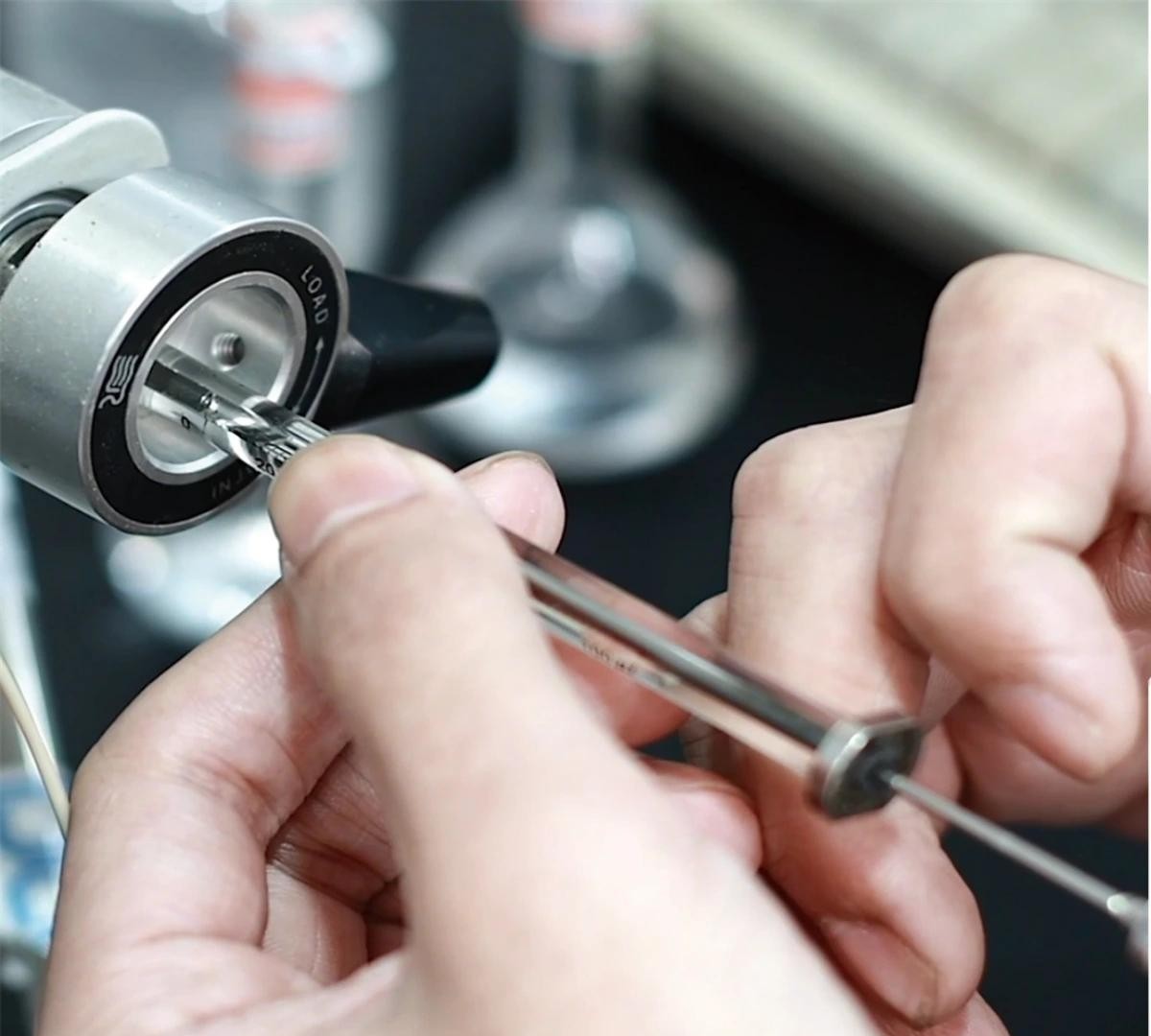
Visit the plant yourself or commission a third-party audit. The walk-through should cover the production lines (automation level, age, housekeeping), the QC laboratory — look for functioning HPLC and GC instruments in daily use, not just a poster of them — incoming raw-material control, the warehouse, and effluent and waste treatment. An automated high-rack warehouse, for instance, is hard evidence of real throughput.
6. Batch COAs and Retention Samples
A serious plant tests every production batch and issues a certificate of analysis tied to a unique batch number printed on the packaging. Ask how long retention samples are archived and how a field claim would be investigated against them. A supplier who cannot produce a batch-specific COA chain is not a manufacturer you can make claims against.
7. Export Experience and References
How many years has the plant exported, to which markets, and on what terms (FOB, CIF)? Ask for references from importers in markets with demanding regulatory regimes, and confirm that export documents — including dangerous-goods papers for flammable and toxic products — are prepared in-house rather than improvised by a forwarder.
8. Capacity Check
Request the equipment list, the number of production lines and realistic daily output, then compare those figures with the volumes you intend to order. Concrete numbers make this verifiable: BNSD lists six air-mill WDG/WP lines (about 20 t/day of powder), two SC lines (about 8,000 L/day), five EC/SL lines (about 20,000 L/day) and a new 8,000 t/a digitalized WDG plant (company information). A supplier claiming national volumes from one small line will fail this arithmetic quickly.
9. Independent Sample Testing
Never skip this step. Draw a sample from the pre-shipment lot itself — not from a courier-friendly bottle handed over at the office — and send it to an independent laboratory. Compare the results against the agreed specification and the supplier’s COA. For biological performance, pair the chemical analysis with a greenhouse or field trial in your own market.
10. Contract Terms
The contract should annex the exact specification: active-ingredient content, formulation type, physical parameters as applicable, packing materials and pack sizes, acceptable tolerances, inspection clauses, the claims window and the arbitration venue. Vague specifications are where disputes are born, and every later disagreement is settled by whichever party wrote the detail.
11. Payment Structure
Standard practice for a Chinese manufacturer is T/T with an advance payment and the balance against shipping documents — BNSD, for example, works on T/T with a 50% advance (company information). Read the structure both ways: demands for full prepayment before production, and terms so lenient the supplier seems indifferent to risk, both tell you something about who will still be answering the phone when something goes wrong.
12. Communication and Technical Support
Judge responsiveness before you owe each other money: time-zone discipline, English technical documentation, label and artwork support, and regulatory assistance for your destination market. After-sales behaviour is the part of the product you cannot test in a laboratory, and it is the hardest thing for a shell company to fake.
A Verifiable Factory: BNSD Agro
BNSD Agro (Shandong Bainong Sida Biotechnology Co., Ltd.), founded in 2003 in Qingzhou Economic Development Zone, Weifang, Shandong, is a national-designated pesticide manufacturer listed on the Qilu Equity Trading Center. The company states that it is certified to ISO 9001, 14001 and 45001, runs HPLC and GC laboratories with batch-level QC, operates an automated high-rack warehouse, welcomes SGS or buyer-arranged pre-shipment inspection, and in 2025 ranked No. 32 among China’s formulation enterprises on RMB 577 million in sales (company information). Suppliers who publish this level of verifiable detail are the ones worth flying out to audit. Start on the about page, then contact the export desk to arrange a factory visit or an OEM discussion.
FAQ
How do I tell a trading company from a real pesticide factory?
Check the business scope on the licence, ask for the production licence and registration certificates in the seller’s own name, and compare the registered address with the plant address. Then ask for a live video walk-through of the lines while they are running. A reseller will hesitate on all four; a factory will not.
What exactly is certificate leasing and why should I care?
It is when a plant sells product under another company’s production licence or registration because it holds none of its own. The goods may be physically fine, but the legal chain behind them is broken — exposing you to regulatory action in China and complications at import, and leaving you without a responsible party if the product fails.
Can I rely on the supplier’s COA alone?
No. Treat the COA as a starting document, not proof. Verify with an independent laboratory against the contractual specification, keep your own sealed reference samples from each lot, and check that the batch number on the COA matches the packaging.
How long should a factory audit take?
A focused one- or two-day visit is enough to cover lines, QC lab, warehouse and documentation if you prepare a checklist in advance. Third-party audits add a written report you can share with your own customers and regulators, which is often worth the fee on its own.
WhatsApp / WeChat: +86 199 0636 5856