
Potato, sweet potato and ginger share one defining trait: the harvest is the part of the plant that never sees daylight. Soil pests attack it directly, tuber quality is judged on skin and shape, and one foliar disease — potato late blight — can flatten a crop faster than anything else in the season. This guide assembles a practical potato pest control and fertilizer program around a single granule anchor, and is equally applicable as a tuber crop program for sweet potato and ginger. Where claims end, this guide says so plainly.
What Potato, Sweet Potato and Ginger Have in Common
Three realities drive the program design:
- The edible organ lives in the soil, so the pest pressure that matters most is soil-dwelling: wireworms, cutworms, root-feeding larvae and, for potato, tuber-mothe larvae in some regions.
- Quality is physical. Tunnels, holes and misshapen tubers are grade reductions no later spray can repair — prevention must happen while the tuber forms.
- Nutrition is build-up, not burst. Tubers accumulate dry matter over months; a steady, balanced nutrient supply beats one heavy shot.
The Season at a Glance
| Stage | Focus | Tool in the program |
|---|---|---|
| Before planting | rotation, certified seed (potato), residue management | general agronomy |
| At planting | soil pests on the fertilizer base | 0.16% chlorantraniliprole + clothianidin GR, NPK 15-9-21 sulphate |
| Vegetative growth | canopy build-up, scouting | moisture and nutrition management (general) |
| Canopy close onward | late blight vigilance | destination-registered oomycete fungicides (see honest note below) |
| Bulking to harvest | tuber grade protection | continued soil-pest cover from the planting granule |
At Planting: The Tuber Crop Granule
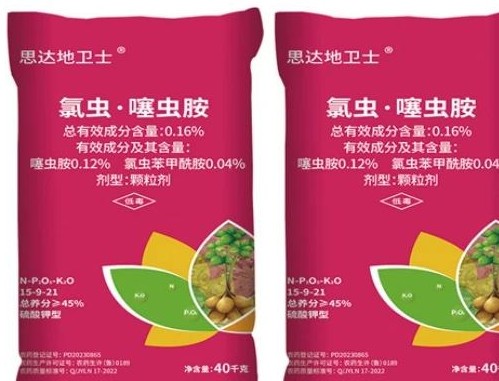
The anchor is the same insecticide-fertilizer platform used in the peanut program, on a tuber-specific analysis: 0.16% chlorantraniliprole + clothianidin GR on an NPK 15-9-21 sulphate base, 40 kg bags (Chinese registration: potato, sweet potato and ginger, soil pests; company product information).
Three things happen in one basal operation at planting:
- Chlorantraniliprole (IRAC 28) places diamide activity into the root and tuber zone, where wireworms and other soil larvae feed.
- Clothianidin (IRAC 4A) adds systemic neonicotinoid activity against early soil and sucking pests.
- NPK 15-9-21 sulphate supplies a potassium-forward, sulphate-based analysis that matches the bulking profile of tuber crops — potassium drives dry-matter and starch accumulation, while the sulphate base avoids excess chloride on chloride-sensitive crops (general agronomy).
The 40 kg bag format matches standard basal-dressing logistics: no extra pass, no separate insecticide application at a moment when every operation window counts. The full granule range is listed under granules, and the category logic is explained in the pesticide-fertilizer granule buyer’s guide.
Late Blight: An Honest Note on What This Program Does Not Cover
Potato late blight (an oomycete disease) is the season-defining threat of the crop, and this program does not — and should not — pretend the planting granule addresses it. It does not. Late blight is managed with dedicated oomycete-active fungicides (CAA, phenylamide, QoI and multi-site classes, per general plant-pathology practice), applied on a protection schedule driven by weather.
For buyers, the honest path through this topic is registration-based:
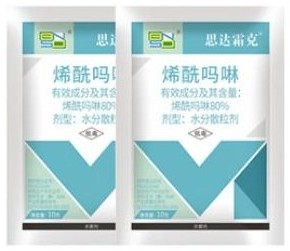
- Chinese registration ≠ destination authorization. BNSD’s catalog includes dimethomorph 80% WDG — a CAA-class oomycete fungicide — but its Chinese registration is for cucumber downy mildew (20–25 g/667 m²). It is shown here as an example of the oomycete class in the portfolio, not as a potato-registered product.
- Use destination-registered oomycete products for potato. Whether a dimethomorph, mandestrobin, mancozeb or any other product may be recommended on potato in your market depends entirely on that market’s registration.
- Plan the fungicide basket early. Late blight programs need several modes of action to rotate; identify which groups hold registrations in your destination before the season starts.
This is the same registration-first logic used across every crop program in this series — see destination market registration overview.
General IPM Practices That Carry the Program
Around the two anchors — the planting granule and a destination-registered blight program — standard tuber-crop IPM does the rest:
- Certified seed for potato. Virus and seed-borne problems cannot be sprayed away; seed quality is the first input decision.
- Rotation of two to three years away from solanaceous and other host crops to break soil-pest and disease cycles.
- Timely hilling — sound hill formation protects developing tubers from greening and reduces egg-laying sites on lower stems (general practice).
- Harvest and storage discipline. Minimize skinning wounds at lifting, allow curing, and inspect stores: damage that opens the way to rots is a quality loss made at harvest, not in the field.
FAQ
Does the 0.16% GR product control late blight?
No. The granule is an insecticide-fertilizer for soil pests on the fertilizer base; late blight is a foliar oomycete disease that requires dedicated, destination-registered oomycete fungicides on a protective schedule. Keep the two programs separate in planning and in farmer communication.
Which crops does the NPK 15-9-21 granule cover?
The Chinese registration covers potato, sweet potato and ginger (company product information). Other crops, other analyses and destination-market registrations are separate questions — the export team can map the granule range to your market’s status.
Why show a cucumber-registered product in a potato article?
To illustrate the oomycete class buyers need for late blight, and to demonstrate how claims stay honest: dimethomorph 80% WDG is in the catalog for cucumber downy mildew in China, and any potato recommendation in your market must rest on that market’s own registration. Label status, not catalog presence, governs use.
What rate should be used for the planting granule?
Application rates and rates per hectare follow the Chinese registration label for the registered crops, and the destination market’s label always governs final use. Contact the export team for the current label documentation.
To review granule specifications or discuss a tuber program for your market, message the export team.
WhatsApp / WeChat: +86 199 0636 5856