
A consignment of tea, grain, fruit or vegetables can be well grown, well packed and competitively priced — and still be turned away at the border for one reason: residues above the legal limit. For anyone importing crop protection products, maximum residue limits are not a laboratory curiosity; they are market-access infrastructure. Your product choice, your spraying calendar and your shipment paperwork all interact with them. This guide explains what a pesticide MRL actually is, why it decides whether an agricultural shipment clears import inspection, how the pre-harvest interval connects to residue levels, and a practical compliance approach you can run season after season.
What an MRL Actually Is
MRL stands for maximum residue limit: the highest concentration of a pesticide residue, expressed in milligrams per kilogram, that is legally tolerated in or on a food commodity when it is placed on the market. Three points matter for exporters:
- It is set per pesticide–commodity pair. The limit for one active ingredient on wheat is independent of the limit for the same ingredient on tea or apples. There is no single “product MRL” — only a matrix of active-ingredient-plus-crop limits.
- Each authority sets its own list. Destination regulators publish their own MRLs for their own market, and international reference values exist alongside them. The lists differ, sometimes substantially.
- Where no specific limit exists, a default may apply. Several markets apply a very low general default limit when a pesticide has no approved use on that crop — an approach designed to catch illegal or off-label use, and the reason an unregistered product can create a residue problem even at low levels.
An MRL is not primarily a safety fence. It is a compliance threshold that verifies the product was used according to approved good agricultural practice — right product, right rate, right timing — including respect for the pre-harvest interval.
Why MRLs Decide Market Access for Importers
Import inspection regimes routinely test food shipments for pesticide residues, and an exceedance triggers consequences that are expensive well beyond the value of one container: rejection, re-export or destruction, registration of the violation against your supply chain, and difficult conversations with retail customers who may operate private standards stricter than the legal ones.
Two practical realities follow:
- Markets are not interchangeable. A spray program built for one market can breach another’s limits, because the MRL lists, the approved uses and even the default-limit policies differ. Always work from the destination market’s own list.
- Some crops attract more attention than others. Commodities that are consumed directly and in quantity — tea, herbs and spices, leafy vegetables, stone and citrus fruit — sit under persistent residue scrutiny, and buyers in those chains typically demand pre-shipment evidence, not just compliance hope.
For an importer choosing which products to register and stock, this is a selection criterion as fundamental as field performance: a product without a place on your market’s MRL list, or with limits too tight for the crop’s economics, cannot support a reliable program no matter how well it kills the pest.
The PHI Connection: Timing Drives Residues
Residues do not stay constant after a spray — they decline as the deposit weathers, the plant grows and the active ingredient degrades. That decline curve is exactly what the pre-harvest interval formalizes: the PHI is the number of days between the last permitted application and harvest, chosen so that residues at harvest land at or below the level consistent with the MRL when the product is used as directed.
The practical leverage is large. Among everything a grower does, the timing of the last spray is the single most controllable driver of residue levels at harvest, and it costs nothing to adjust. Chinese registration labels state the PHI per crop — shown as 安全间隔期 — which makes the source label a useful planning reference when you build spray calendars for your own market, provided you reconcile it with your local registration and local PHI requirements.
Our dedicated guide on pre-harvest intervals and how to use them covers the planning side in depth.
A Practical Residue Compliance Approach
Run the same four steps every season and residue compliance stops being a gamble:
- Build your market’s MRL list. Pull the destination authority’s limits for your crops and the actives in your program, and note where no limit exists so the default policy applies. Keep the list versioned and dated.
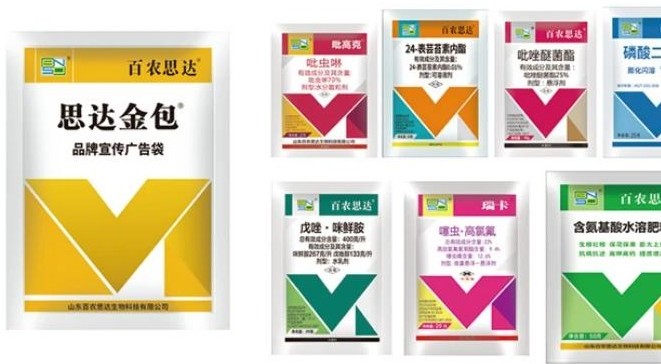
- Choose products with a clean profile in your market. Register and source products from a supplier whose export portfolio you can screen for this purpose — actives that carry workable MRLs on your crops and whose PHI values fit the crop’s harvest rhythm. A full-season program, like a matched wheat kit combining seed treatment, foliar fungicide and insecticide, is only as good as its weakest residue link.
- Respect the PHI and document it. Put the last-spray date on the spray record for every block and every batch, so the harvest date can be checked against the interval rather than trusted to memory.
- Test before you ship. Send samples from representative lots to an accredited laboratory against your market’s list, keep retention samples and the COA for each batch, and build the habit of batch-level traceability so a result can always be traced back to a production record.
The cost of pre-shipment testing is trivial next to the cost of a rejected container — and a documented, repeatable testing record is itself a commercial asset when you sell into quality-driven retail chains.
Frequently Asked Questions
What does MRL mean in food and feed trade?
MRL stands for maximum residue limit — the legal maximum concentration of a pesticide residue, in mg/kg, tolerated in or on a food commodity. It is set per pesticide–commodity pair by the destination market’s authority and enforced through import inspection.
Which market’s MRL applies to my shipment?
The destination market’s own list. Codex and other international reference values exist, but the border authority applies its national limits — including its default limit where no specific value is set. Always build your compliance program from the destination list, not from the list of the market where the product was manufactured.
Does respecting the PHI guarantee compliance with the MRL?
Respecting the pre-harvest interval is the biggest single lever, because last-spray timing drives residue decline. It does not guarantee compliance on its own — rate, number of applications, weather and crop growth all influence final residues — which is why the PHI works together with correct rates and pre-shipment testing rather than replacing them.
How do I test a shipment for pesticide residues?
Take representative samples from the lot, send them to an accredited laboratory, and test against the destination market’s MRL list for the relevant commodities. Keep the report with the batch’s COA and retention samples so every shipment in your program has a complete, traceable residue file.
WhatsApp / WeChat: +86 199 0636 5856