
Lepidoptera programs live and die on rotation. A season built on one mode of action selects resistance with every pass, and the two workhorse groups of the last decade — diamides (IRAC 28) and avermectins (IRAC 6) — cannot carry the calendar alone. Indoxacarb, the oxadiazine of IRAC group 22A, is the rotation partner built for that gap: chemically unrelated to the rest of the list, led by feeding cessation that shows up in the field within hours, and available in a premix that pairs it with emamectin in one pass. This guide explains how the molecule works, where it sits in the BNSD Agro (Shandong Bainong Sida Biotechnology Co., Ltd.) line with its Chinese label rate, why 22A earns its place in rotation, and what to check before sourcing it.
How Indoxacarb Works: a Pro-Insecticide With a Delayed Trigger
Indoxacarb belongs to the oxadiazine chemical class and acts as a sodium channel blocker, classified in IRAC group 22A. Its most distinctive feature is that it is a pro-insecticide: the compound as formulated is only weakly active, and the insect’s own metabolism converts it into the truly active molecule after ingestion. The pest builds its own poison — a design with two practical consequences:
- Selectivity by metabolism. The conversion runs efficiently in susceptible caterpillars and far less so in non-target organisms, which is part of the compound’s favourable profile in IPM programs.
- Feeding stops within hours. Once the active form accumulates, affected larvae cease feeding rapidly — long before they die. In field terms, the crop stops being eaten almost immediately, even though the visible knockdown of the population takes longer. Anyone used to pyrethroid-style “flip and die” needs to read the symptom correctly: a larva that is motionless and no longer feeding on the leaf is a controlled larva.
Because activity is ingestion-led, coverage of the foliage the larvae actually eat matters more than droplet fineness. Thorough spray deposition on the feeding surface is the difference between a 22A pass that works and one that merely wets the field.
Where It Sits in the BNSD Line: 9% Emamectin + Indoxacarb SC
Indoxacarb’s registered position in the BNSD portfolio is a premix: 9% emamectin benzoate + indoxacarb SC, registered on the Chinese label for rice leaffolder at 10–20 g per 667 m². The pairing is deliberate. Emamectin benzoate (IRAC 6) is a stomach-led, trans-laminar avermectin derivative; indoxacarb (IRAC 22A) adds the feeding-stopper profile. Two unrelated modes of action in one pass widen the rotation and cover the leaffolder complex with a single application — which is why this product appears in the rice leaffolder/borer block of the full-season rice program.
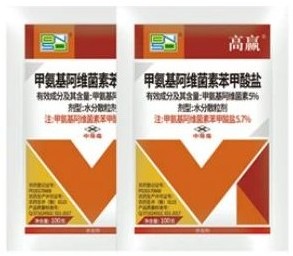
Note what this premix is not: it contains no diamide, and it should never be presented as a chlorantraniliprole product. That distinction is exactly its value — see below.
All rates in this guide are Chinese registration label rates. Registered crops, pests and doses differ by destination market — always follow the destination-market label.
Why IRAC 22A Rotation Matters
Resistance management is a numbers game over generations, and 22A earns its slot in three ways:
- A genuinely different target. The sodium channel blocked by 22A is untouched by IRAC 6 (glutamate-gated chloride channels) and IRAC 28 (ryanodine receptor). Alternating across these groups means each generation of caterpillars faces a different physiological problem.
- It relieves pressure on the workhorses. Every pass at a flight peak that uses the 6 + 22A premix is a pass that does not select the diamide or the avermectin alone — stretching the effective life of both.
- Feeding cessation caps damage between generations. A mode of action that stops feeding within hours limits leaf-area loss even when spray timing is less than perfect, which is worth a lot in a dense rice canopy.
The general rule applies as always: no group repeated within a pest generation, a capped number of applications per group per season, and premixes counted as both of their groups in the plan. The framework is set out in our pesticide resistance management guide and, for the rice crop in particular, the rice pest control program guide.
Sourcing Checks Before You Order
Indoxacarb SC is a suspension concentrate, and the usual SC quality questions apply — but a pro-insectic premix adds a few of its own:
- Registration documents in the supplier’s own name. Ask for the ICAMA registration certificate covering 9% emamectin + indoxacarb SC and match the certificate number, content and formulation code against the label. Bainong Sida holds 70 ICAMA registrations with about 60 pending; certificate numbers are available on request.
- Batch release against the standard. Every batch should be released by HPLC/GC analysis against the registration standard, with batch-level traceability — BNSD’s standard practice before shipment.
- Physical inspection on receipt. Crystals, sediment or layering in an SC are flags; check the COA against the label and keep retention samples from each lot.
- Destination registration first. A Chinese registration authorizes the Chinese market only. Confirm the product’s registration status, claims and pre-harvest intervals in your market before positioning it.
- Pack format for the channel. OEM packing runs from 10 mL sachets to bulk packs across eight-plus formulation types, so the premix can be matched to the retail format your market actually sells.
For the wider lepidoptera toolkit and how 22A compares with the diamide and avermectin options, see the insecticides catalogue; for samples, documents or private-label packing, contact the export team.
FAQ
What is indoxacarb used for?
Indoxacarb is a lepidoptera insecticide — caterpillar control across crops. In the BNSD Agro line it appears in 9% emamectin + indoxacarb SC, registered for rice leaffolder at 10–20 g/667 m² on the Chinese label. Which crops and pests it may legally be sold against in your market is defined by the destination registration.
How fast does indoxacarb work?
Feeding stops within hours of ingestion — larvae cease damaging the crop well before they die — while full mortality develops over the following days. It should not be judged by pyrethroid knockdown standards; the meaningful metric is that the plant stops losing leaf area almost immediately.
Why rotate indoxacarb with diamides and avermectins?
Because it works on a different target: indoxacarb blocks sodium channels (IRAC 22A), diamides act on the ryanodine receptor (IRAC 28) and avermectins on glutamate-gated chloride channels (IRAC 6). Alternating unrelated groups across pest generations is the core of resistance management, and a 6 + 22A premix extends the life of both partners.
Can indoxacarb be combined with emamectin?
They already coexist in a registered premix: 9% emamectin + indoxacarb SC, pairing a stomach-led, trans-laminar avermectin with the oxadiazine feeding stopper in one pass at 10–20 g/667 m² for rice leaffolder (Chinese label). Tank-mixing separate products is a different question — follow the destination label’s mixing provisions and jar-test first.
WhatsApp / WeChat: +86 199 0636 5856