
A crop program that works beautifully in one province can fail quietly in another country with the same crop. The active ingredients are the same; the season is not. Rain arrives six weeks earlier, the variety flowers a month apart, the pest spectrum adds one species the original program never faced — and suddenly the copy-paste program sprays at the wrong time for problems that are no longer there. Distributors who build durable businesses treat crop programs as frameworks, not products: a skeleton of decisions that gets re-fitted to each market. This guide gives a practical framework for that work, shows what a supplier’s portfolio has to offer for customization to be possible at all, and walks through the structure of a worked example you can adapt.
Why Copy-Paste Programs Fail Across Regions
Four forces break transplanted programs, and none of them is mysterious:
- Climate and season shift. Spray windows, pre-harvest intervals and the number of generations a pest completes all depend on local temperature and rainfall, not on the calendar of the program’s home market.
- Varieties and cropping systems. A short-season variety compresses the flowering window; transplanted versus direct-seeded rice changes weed pressure entirely.
- Pest and disease spectrum. One added species — a root maggot, a viral vector, a leafhopper — can invalidate a program that ignored it, even when everything else fits.
- Registration reality. A product in the master program may simply not be registered for that crop in your market, or may carry different rates and waiting periods on the local label. Programs must be built from what the destination label allows, always.
A Customization Framework: Base, Constraints, Timing
The work becomes manageable when it is split into three layers:
| Layer | What you decide | Practical questions |
|---|---|---|
| Base products | The backbone: seed treatment, key herbicide, key fungicide, key insecticide per crop stage | Which registered products cover the non-negotiables? |
| Local constraints | What the destination label, climate and pest spectrum add or remove | Which uses are missing registration? Which pest has no product yet? |
| Timing shifts | When each step actually happens in your market | What signals (stage, degree-days, rainfall) trigger each spray? |
The discipline is to change one layer at a time and record why: a program document that says what was adapted and what stayed, season by season, is what turns a one-off basket of products into an asset your technical team can iterate on.
What a Supplier’s Portfolio Has to Offer
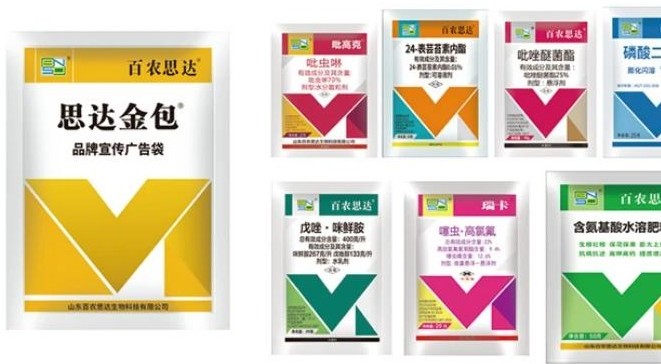
Customization is only possible if the catalogue behind it is broad enough to swap pieces in and out. This is where a manufacturer’s range is a structural advantage rather than a convenience. BNSD Agro (Shandong Bainong Sida Biotechnology Co., Ltd.) exports 99 SKUs across six categories — 25 fungicides, 43 insecticides and acaricides, 6 herbicides, 7 insecticide-fertilizer granules, 14 plant nutrition products and 4 crop program kits — in more than eight formulation types (company information). For program design, that breadth means:
- alternatives exist when one product lacks a registration in your market;
- granules, SC, WDG, EC, EW and nutrition lines can be combined into one coherent program and one consolidated container;
- the same actives can be re-packaged and re-labelled to match what your market’s registration actually permits.
The full catalogue is on the products page.
A Worked Example Structure
The program guides already published on this site are themselves templates — the same skeleton adapts to other markets. Take the wheat program structure as the pattern:
- Seed treatment first. Start the season with protection bought cheaply and early — a seed treatment against early aphids and the viruses they vector (in the reference program, thiamethoxam 35% SC seed dressing).
- Weed step tied to stage. Broadleaf herbicides applied at the correct crop stage (fluroxypyr or florasulam + MCPA in the reference), adjusted to the weeds your fields actually carry.
- Disease steps at fixed crop stages. Powdery mildew control at stem extension, fusarium head blight protection at flowering — stage-triggered, not calendar-triggered.
- Sucking pest step when thresholds are met. Aphids in spring, on scouting rather than on a date.
- A plant-health close. A regulator-type treatment (in the reference, 24-epibrassinolide) to support the crop through stress.
The rice program guide shows the same skeleton for a different crop: damping-off in the seedbed, blast and sheath blight at stage, planthoppers and leaffolders on thresholds. When you adapt either to your market, you keep the skeleton and swap the registered products, the rates from your local label, and the trigger signals from your own climate. If you want a program sketched against your market’s crop list, the export desk can propose a structure from the existing catalog — start via the contact page.
FAQ
How much of a program should I change for a new market?
Change only what the four forces force you to change: registration limits, pest spectrum, variety and climate timing. Keep the skeleton — the stage-by-stage logic — intact, and document every substitution so next season starts from a record, not from memory.
Can a supplier really support customization, or do they only sell products?
It depends on depth of range and technical staffing. A supplier with a broad portfolio, registered products in multiple formulation types and a technical team can propose alternatives when a registration or a pest gap blocks a step. Ask a prospective supplier to take one market’s crop list and sketch a program — the quality of the answer tells you whether they sell products or build programs.
Should programs include plant nutrition products?
Increasingly, yes, where the market and the label allow. Nutrition lines — foliar fertilizers, biostimulants, granule-mediated insecticide-fertilizer products — sit naturally at crop stages the program already touches, and they give retailers a broader basket from the same supplier and the same container.
How do I keep a customized program consistent across many customers?
Write the program down as a document: layers, products, rates from the local label, trigger signals, and the reason for each adaptation. Train your field staff on the document and review it after each season against what actually happened. Consistency across customers comes from the document, not from any individual agronomist’s memory.
WhatsApp / WeChat: +86 199 0636 5856