
Starting a crop protection distribution business is one of those ventures where the first year decides the next five. The market rewards distributors who build order — registrations before inventory, a verified supplier before volume, technical credibility before scale — and punishes those who import first and think afterwards. This roadmap lays out the first year in the sequence that actually works: assess the market, choose the supplier, place a first mixed order, build the registration pipeline, stand up technical support, then grow category by category. The principles hold in any market; the examples draw on how we work with new distributors at BNSD Agro (Shandong Bainong Sida Biotechnology Co., Ltd.).
Step 1: Assess the Market and Its Registration Reality
Before any product list, map two things honestly. First, agronomics: which crops dominate your territory, which pests and diseases cost growers the most money each season, and what the current products fail to deliver — that gap is your opening. Second, and more binding, the registration landscape: crop protection products can only be sold legally if they are registered in your market, and registration applications are filed by a local entity — the importer is the local registrant, not the foreign factory. So the first-year question is not “what should I sell?” but “what can I register, and what is already registered that I can distribute?”. Your registration authority’s product database is the first research tool of the business.
Step 2: Choose a Supplier You Can Build On
The supplier decision is a structural one — everything downstream inherits it. Judge candidates as a manufacturer verification exercise, not a price comparison: registration certificates and the documents behind them, batch-level quality control (HPLC/GC release, traceability, retention samples), willingness to accept audits and third-party inspection, export experience to your region, and the breadth to grow with you. Our step-by-step guide to verifying a Chinese pesticide manufacturer gives the full checklist; run it before the first payment, not after the first problem. A distributor who verifies once and builds for years beats one who re-shops suppliers every season.
Step 3: Place the First Mixed Order
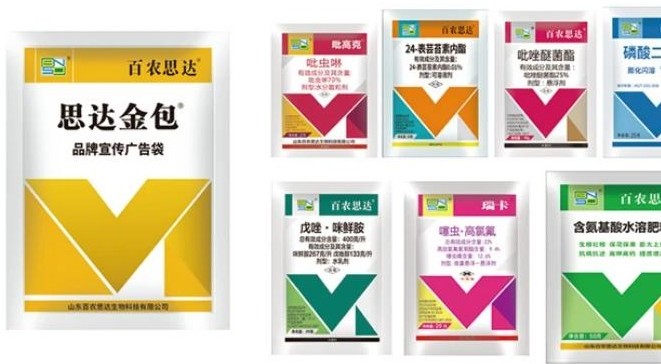
The first order has one job: put a working product range into the market at the lowest sensible risk. That argues for a mixed container — several SKUs across a couple of categories rather than a deep bet on one product. A broad manufacturer portfolio makes this easy: BNSD exports 99 SKUs across six categories (fungicides, insecticides and acaricides, herbicides, insecticide-fertilizer granules, plant nutrition and crop programs), in pack formats from 10 mL to 40 kg, so a first order can cover a real market basket in one shipment. Test with it deliberately: trial packs for demonstration, labels in the destination language, and enough units per SKU to reach real farmers rather than only your warehouse.
Step 4: Build the Registration Pipeline
While the first order sells, the pipeline work begins, because registrations take time and the pipeline is what turns a one-year trader into a multi-year brand. A capable supplier supports this directly: at BNSD, registration support means technical dossiers, COAs, samples and analytical support, backed by 70 ICAMA registrations and full document packages per product — while the importer remains the local registrant and owns the market authorization. Sequence the pipeline the way the business will grow: register the workhorse products first, follow with the differentiators, and keep a standing list of what files next. Each finished registration becomes an asset no competitor can repossess.
Step 5: Stand Up the Technical Support Relationship
Distribution in this industry is a technical trade wearing a commercial jacket. Farmers ask what to use, when, at what rate, and in what tank mix — and the distributor who answers accurately becomes the default supplier. This is where the supplier relationship should be used as more than a purchase order line: technical packages, label guidance, crop program design and field-trial support are what a manufacturer like BNSD provides to its distribution partners, and they translate directly into your local credibility. Build the habit early — send the field questions back, request the trial protocols, learn the products’ registered uses properly — and the second-year reorder conversation takes care of itself.
Step 6: Grow by Category
With registrations, supply and support in place, growth becomes a category decision rather than a gamble. The usual arc: prove yourself in one or two categories where your agronomic story is strongest (for many new distributors that is insecticides or fungicides on their dominant crop), then extend into adjacent categories — herbicides, then granule insecticide-fertilizer products, then plant nutrition — reusing the supplier relationship, the logistics rhythm and the registration pipeline each time. OEM capability extends the same logic to your own brand: with 8+ formulation types and pack formats from 10 mL to 40 kg, a distributor can graduate from reselling to building private-label lines as volumes justify. The products page shows the range that path can draw on.
Common First-Year Mistakes
Learn them here instead of paying for them:
- Importing before registering. Goods without destination-market registration are stock you cannot legally sell. Pipeline first, or at minimum in parallel.
- Buying too broad too early. Twenty unproven SKUs dilute money and attention; a focused first order with real field presence teaches more.
- Choosing suppliers on price alone. The cheapest quote usually prices in a specification you will discover in the field — the quality economics rarely favor it.
- Skipping sample and first-shipment verification. Registration match, COA match and independent testing cost little and prevent the classic first-year disaster.
- Underestimating lead times. Production, DG shipping and customs all take the time they take; season-driven buyers who plan late buy expediting with margin.
- Neglecting the technical layer. Products without advice sit on shelves; products with correct guidance move and reorder.
Start the Roadmap with BNSD Agro
Every step above is one BNSD Agro works through with new distributors regularly — from document packages for your registration filings to a first mixed container with destination-language labels, backed by batch-level traceability and HPLC/GC release before every shipment. Begin with the manufacturer verification guide, review the portfolio on the products page, and open the conversation through the contact page with your market, crops and target season.
FAQ
How do I start a crop protection distribution business?
Follow the sequence: assess your market’s crops, pests and registration landscape; verify and select a supplier with documented quality control; place a mixed first order sized for a real trial; build the registration pipeline with your supplier’s document support; establish technical support for your customers; then grow category by category. Registration feasibility comes before any product decision, since the importer is the local registrant.
How many products should a new distributor launch in the first year?
Enough to cover a real market basket and no more — typically a focused set across a couple of categories, chosen for the crops that dominate your territory. A mixed first order from a broad-portfolio manufacturer lets you trial several SKUs in one shipment, then concentrate volume behind what the field actually responds to.
Who is responsible for registering the products in my market?
The local entity files and holds the registration — as importer, that is you, and the foreign factory cannot own your market authorization. The supplier’s role is to support the filing: technical dossiers, COAs, samples and analytical support. At BNSD this registration support is backed by 70 ICAMA registrations and full document packages per product.
What support can a Chinese manufacturer provide to a new distributor?
Document packages for registration filings, samples and trial protocols, label guidance and destination-market packaging, crop program design, field-trial support and batch-level quality documentation — plus OEM/private-label production as volumes grow. The practical test during supplier selection is whether this support is offered before you ask.
WhatsApp / WeChat: +86 199 0636 5856