
Few pesticide buyers ship one product forever. The reality of the trade is a mixed basket: an insecticide for one crop, a fungicide for another, a herbicide, a nutrition line, all moving toward the same warehouse in the same season. Shipping them well means learning the discipline of container consolidation — putting multiple products into one shipment without creating quality, safety or customs problems along the way. Done right, consolidation is how trial orders stay affordable and repeat volume stays efficient. Done carelessly, it is how incompatible goods end up stowed together and packing lists stop matching reality. This guide covers both halves: the commercial logic (LCL vs FCL) and the physical discipline (segregation and documentation).
Trial Orders vs Repeat Volume
The first question is not “how do I consolidate?” but “what stage am I shipping?”. A trial order exists to test products, packs and a supplier with the smallest sensible outlay — which usually means a mixed load of small quantities across several SKUs. A repeat order exists to supply proven sellers — which usually means denser, more uniform cargo. The consolidation answer is different for each, and the most common planning mistake is running trial-stage logistics into volume season. Decide the stage first; the shipping mode follows.
LCL vs FCL: The Logic
| LCL (less than container load) | FCL (full container load) | |
|---|---|---|
| Best for | Trial orders, market testing, top-ups | Repeat volume of proven SKUs |
| Cost structure | You pay for the space your cargo occupies | You pay for the whole container |
| Handling | More consolidation and deconsolidation steps | Factory loads, container sealed, buyer unloads |
| Risk profile | More handling, more transshipment touchpoints | Fewer touchpoints; goods stay in one box |
| Timing | Consolidator schedules; can be slower | Booked directly; more predictable |
For pesticides the risk column matters more than for most goods: every extra handling step is an extra chance for damaged packs, mixed batch records and documents that drift from contents. The practical pattern is LCL for the trial, FCL once the product list is proven — and when the trial graduates to FCL, keep it mixed (next section) rather than forcing full containers of a single SKU.
Mixed-Product Consolidation from One Factory
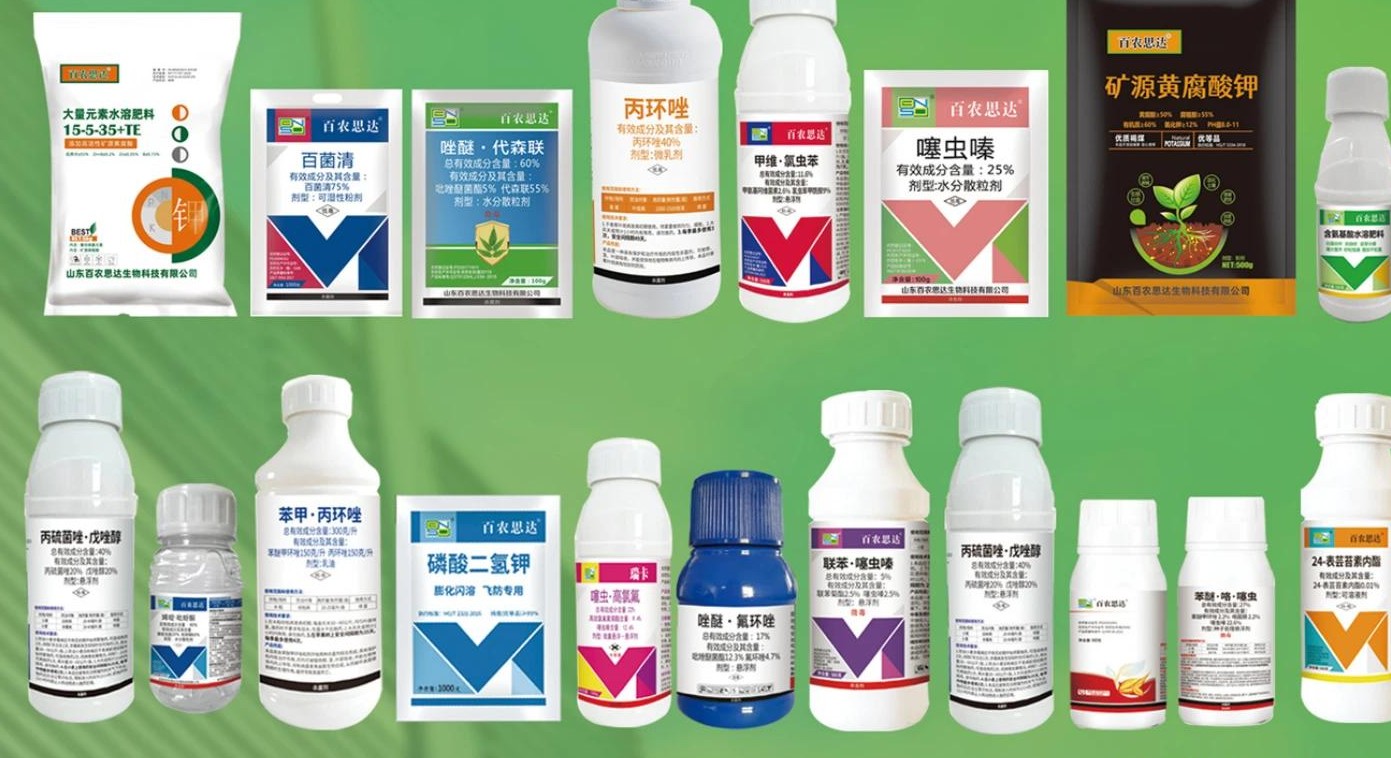
Consolidation is easiest and safest when all the products start in one place. A factory whose portfolio is broad enough to fill a mixed container internally removes the multi-supplier coordination problem — different origin warehouses, different document sets, different quality standards — before it begins. This is where portfolio breadth becomes a logistics advantage: BNSD Agro (Shandong Bainong Sida Biotechnology Co., Ltd.) exports 99 SKUs across six categories — fungicides, insecticides and acaricides, herbicides, insecticide-fertilizer granules, plant nutrition and crop programs — so a mixed container can be picked, checked and stuffed at one plant, under one quality system, with one document set. Buyer inspection before loading (third-party or own) is equally easy when everything is in one yard. Browse the range on the products page to see how far a single mixed load can stretch.
DG Segregation Inside the Container
Pesticides mostly travel as dangerous goods — Class 6.1 (toxic substances) for many solid and some liquid formulations, Class 3 (flammable liquids) for solvent-heavy ECs — and the IMDG Code governs how they may be stowed. The principles that matter inside a mixed container:
- Segregate incompatible classes. Class 6.1 and Class 3 cargo must be stowed according to the segregation requirements of the IMDG Code; some combinations may not share a compartment or need defined separation. Your DG-certified forwarder confirms the permitted stowage plan for the exact UN numbers shipped.
- Keep the paperwork consistent. DG declarations must match what is physically in the box — every UN number, class and package count. A declaration that does not match the stuffing plan is the fastest route to a container held at port.
- Respect the physical layout. Heavy granule bags below, lighter cartons above; liquids secured so they cannot crush or leak onto dry goods; nothing stacked beyond the pack’s crush rating. Your forwarder’s stuffing plan exists — use it.
The full picture of pesticide dangerous goods shipping — classification, packing groups, documentation — is in our dangerous goods shipping guide.
Packing List Discipline
In a consolidated container the packing list is not an afterthought; it is the contract between the documents and the physical goods. Each SKU should appear with its batch numbers, pack counts, net and gross weights, and the carton numbers it occupies in the stow. Keep that chain aligned — packing list to labels to DG declaration to bill of lading — and customs clearance, warehouse receiving and any later claim all work smoothly. Break it, and every downstream step gets slower: a receiving team that cannot match cartons to a list becomes a quality claim that cannot be pinned to a batch. The habit is simple: print the packing list from the final stuffing plan, not from the sales order, and verify it at the container door before the seal goes on.
How BNSD Consolidates
Mixed loads are standard practice at BNSD Agro, not an accommodation: the six-category, 99-SKU portfolio exists precisely so distributors can fill a container with the right products for their market, packed to destination label requirements and released batch by batch by HPLC/GC before stuffing. The export desk can advise on what fits a container and how the DG stowage will be planned — start via the contact page, and read the dangerous goods shipping guide for the regulatory detail.
FAQ
Can I mix different pesticide products in one container?
Yes, and it is standard practice — provided the cargo is planned, not improvised. Products must be compatible for stowage under the IMDG Code segregation rules (Class 6.1 and Class 3 have defined requirements), the packing list must match the physical contents carton by carton, and the DG declarations must match what is actually stuffed. A single factory with a broad portfolio makes mixed loads far simpler.
Is LCL or FCL better for pesticides?
LCL suits trial orders and market testing: you pay only for the space used, accepting extra handling and transshipment touchpoints. FCL suits repeat volume: fewer handling steps, sealed at the factory, more predictable timing. The common path is LCL for the first mixed trial, then FCL for proven volume — still mixed across SKUs rather than forcing full single-product containers.
What is DG segregation and why does it matter in a mixed container?
Segregation is the IMDG Code’s rule that certain dangerous goods classes must be stowed apart — pesticides commonly ship as Class 6.1 (toxic) or Class 3 (flammable liquids), and these have defined stowage requirements relative to each other and to other cargo. Ignoring segregation risks rejected bookings, containers held at port, and real safety consequences. A DG-certified forwarder confirms the stowage plan for the exact UN numbers in the load.
What documents must match the container contents?
The packing list, DG declarations, labels on the packs and the bill of lading must all describe the same goods — same SKUs, batch numbers, package counts, weights and UN numbers. The packing list should be printed from the final stuffing plan and verified at the container door before sealing, because every downstream step (customs, receiving, claims) depends on that alignment.
WhatsApp / WeChat: +86 199 0636 5856