
Citrus orchards run on a calendar, and the orchards that stay clean are the ones whose owners work the calendar before the pests do. Overwintering mites and scale explode on the spring flush, bacterial diseases spread in the first wind-driven rains, and sucking pests gather on every summer flush. A citrus pest control program therefore reads as a sequence — winter cleanup, spring mite window, young-fruit disease window, summer flush protection, stress regulation — and each stage has its own products and timings.
This guide follows that sequence using products and rates as they appear on Chinese registration labels. As with every crop program in this series, the rates describe the Chinese label position: in export markets the destination-market label governs, and crops, rates and pre-harvest intervals must follow it. For destination-specific documentation, contact us.
Winter Dormancy: Cleanup Sets the Season
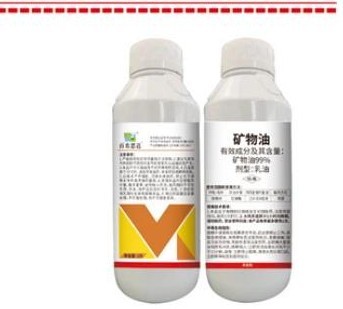
The dormant season is when the next year’s pressure is cheapest to reduce. Lime sulphur 29% aqueous solution (AS) applied at 0.4–0.6 °Bé on dormant trees is the classic cleanup spray, sweeping overwintering mites, scale and inoculum off the wood. Mineral oil 99% emulsifiable concentrate (EC) at 150–300× works purely by physical mode, smothering overwintering mites and scale insects — and it is best reserved for once per season.
The pairing carries two cautions that travel to every market. First, mineral oil and lime sulphur must never be tank-mixed or applied within days of each other — the combination scorches leaf tissue, and the destination label states the interval to leave. Second, avoid high-temperature spray windows, where both products can burn foliage.
Spring Flush: the Red Spider Window
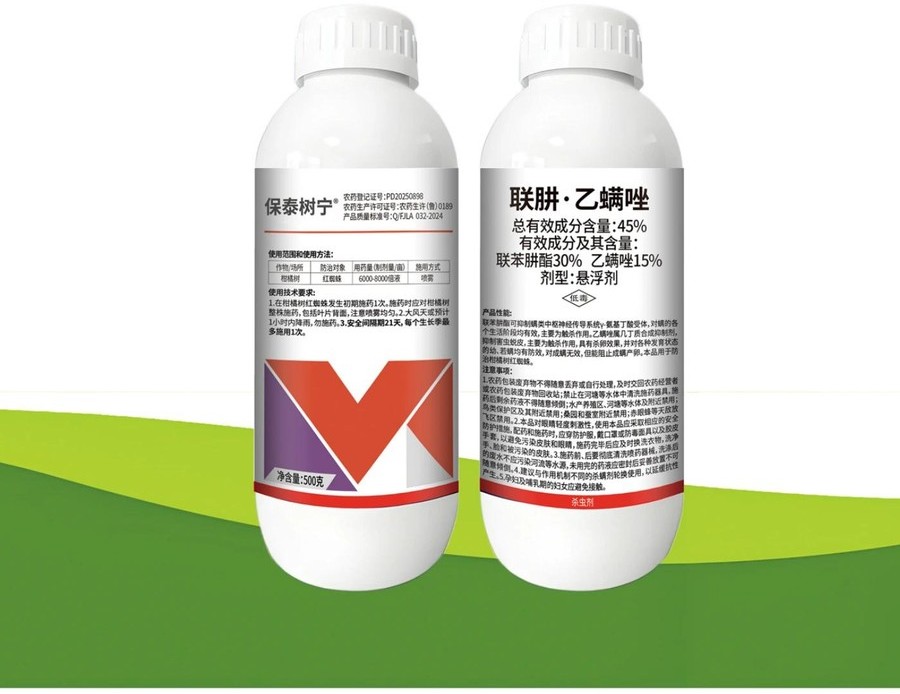
Citrus red spider mite builds its first population on the spring flush, and the damage done to young leaves follows the tree for the rest of the season. The anchor product is bifenazate + etoxazole 45% suspension concentrate (SC) at 6000–8000×: the combination is active on all mite stages — adulticide with ovicidal activity — so a well-timed spring pass clears the adults and the eggs laid on the flush at the same time.
Where a second, different mode is needed in the window, abamectin + pyridaben 10.5% EC at 2500–3500× (IRAC 6 + 21) is the acaricide option — registered in China on apple, so any citrus positioning must follow the destination-market label rather than the Chinese crop listing.
Flowering to Young Fruit: Bacterial Disease Tools
Wind-driven rain spreads bacterial diseases through flowering and the young-fruit window, when lesions are cheapest to prevent and most expensive to cure. The Chinese tool in this niche is kasugamycin + oxine-copper 45% SC at 2000–3000× — an antibiotic paired with a copper-based contact. One registration detail should be stated plainly: the Chinese registration is on peach bacterial shot hole, so for citrus the product is used per the destination-market label, not on the strength of the Chinese crop listing. Where the destination registration covers citrus, it slots into the petal-fall and young-fruit passes.
Summer Flush: Sucking Pests
Aphids, psylla and soft scale crawlers gather on every summer flush. Flonicamid + bifenthrin 15% SC at 4000–5000× pairs a feeding blocker (IRAC 9B) with a pyrethroid (IRAC 3A) for fast knockdown on the flush; thiamethoxam 30% SC (IRAC 4A) is the systemic-leaning option, with rates per the local label. The agronomic reason these flush sprays are taken seriously goes beyond the direct damage: psylla can vector citrus greening disease in regions where it occurs, and flush management is part of vector management.
Fruit Set to Enlargement: Regulation and Stress Support
Chinese citrus programs routinely add a regulation component. 24-epibrassinolide 0.01% at 2500–3000× is positioned in the stress windows — heat, drought or after cold snaps — to help the crop hold fruit and recover. It is a support tool, not a substitute for the pest program, and no rate sheet promises what the weather decides.
The Season at a Glance
| Stage | Main targets | Product (example) | Chinese label rate |
|---|---|---|---|
| Winter dormancy | overwintering mites, scale; inoculum | lime sulphur 29% AS; mineral oil 99% EC | 0.4–0.6 °Bé; 150–300× (separate timings) |
| Spring flush | red spider mite | bifenazate + etoxazole 45% SC | 6000–8000× |
| Flowering–young fruit | bacterial diseases | kasugamycin + oxine-copper 45% SC | 2000–3000× |
| Summer flush | aphids, psylla, scale crawlers | flonicamid + bifenthrin 15% SC; thiamethoxam 30% SC | 4000–5000×; per destination label |
| Fruit enlargement | stress windows | 24-epibrassinolide 0.01% | 2500–3000× |
All rates are Chinese registration label rates; the destination-market label is authoritative in your market.
Rotation and Safety Notes
- Spread the acaricide modes. Bifenazate + etoxazole, abamectin + pyridaben and mineral oil work by different modes of action — place them across the season instead of repeating one product window after window.
- Oil and sulphur never meet. Mineral oil and lime sulphur must not be tank-mixed, and each needs a clear interval after the other.
- Respect temperature. High-temperature periods are poor windows for oil and sulphur sprays on any label.
- Labels decide. Crops, rates, spray intervals and pre-harvest periods follow the destination-market label, not the Chinese sheet.
What Distributors Should Look For
A portfolio that supports this calendar needs an acaricide set, a bacterial-disease tool, a flush insecticide and a regulation product, with documentation behind every item. BNSD Agro (Shandong Bainong Sida Biotechnology Co., Ltd.) is a national-designated pesticide manufacturer founded in 2003 in Qingzhou, Weifang, Shandong, listing a 99-SKU export portfolio that includes 43 insecticides and acaricides and 25 fungicides, with ISO 9001/14001/45001 certification, HPLC/GC batch release and batch-level traceability from an automated high-rack warehouse (company information). OEM covers eight-plus formulation types in packs from 10 mL to 40 kg, shipped FOB or CIF with T/T 50% advance and third-party or buyer inspection accepted (company information).
See the insecticides and acaricides and fungicides ranges, or contact the export team for specifications and samples.
Frequently Asked Questions
Can mineral oil and lime sulphur be applied together?
No. They must never be tank-mixed, and each application needs a clear interval after the other — the two react on leaf tissue and can scorch. Both also perform poorly in high-temperature windows. The destination label states the interval to observe.
Is bifenazate + etoxazole active on mite eggs?
Yes — that is its commercial logic in the spring window. Bifenazate covers the motile stages while etoxazole reaches the egg and larval stages, so one pass at 6000–8000× addresses the population on the flush. Crop registration follows the destination label.
Which product covers citrus bacterial diseases?
Kasugamycin + oxine-copper 45% SC is the Chinese tool in this class, at 2000–3000×; its Chinese registration is on peach bacterial shot hole, so citrus use depends on the destination-market registration and label. Copper-based contacts remain the general baseline for bacterial diseases where locally registered.
What should a distributor verify before importing a citrus program?
The destination-market registration status of each active, the Chinese label content and certificate numbers, pack sizes and label language, and the manufacturer’s COA practice. The verification guide covers the checklist step by step.
To build a citrus program for your market, message the export team.
WhatsApp / WeChat: +86 199 0636 5856