
Across China’s wheat belt, the phrase 一喷三防 — “one spray, three protections” — describes how wheat is actually protected at the most critical stage of the season: a single, well-timed pass at heading that covers fusarium head blight, powdery mildew and rust, plus the aphids that arrive with them. For international buyers and technical distributors, the concept is worth understanding in detail, because it shapes which wheat fungicide SKUs sell and how they should be positioned. This guide explains the program, the diseases behind it, the active classes that carry it, and the BNSD Agro products that fit — see the fungicide range.
What ‘One Spray, Three Protections’ Actually Means
The name refers to the three threats covered by one pass in the heading window:
- Protection 1 — fusarium head blight (FHB, scab): the floral-infection disease that strikes at anthesis and can ruin both yield and grain quality.
- Protection 2 — powdery mildew and rusts: the foliar diseases climbing the canopy through jointing, booting and heading.
- Protection 3 — aphids: the insect pressure that typically peaks in the same window and vectors barley yellow dwarf virus in some regions.
In practice the tank mix often also carries a nutrition or anti-stress component, so Chinese provinces commonly describe the program as a combined pest-and-stress management pass. The commercial point for buyers is simple: the market rewards products that tank-mix cleanly and cover several targets in one application.
The Diseases and Their Timing Windows
Fusarium head blight (FHB / scab)
FHB infects through the open flower, so the anthesis window is the decisive spray timing. Warm, humid or rainy weather during flowering drives risk sharply upward. The standard defensive approach is a spray at early anthesis, repeated where pressure persists and the local label allows. Missed timing cannot be recovered later in the season — which is why the whole one-pass program is anchored to this window.
Powdery mildew
Wheat powdery mildew typically establishes in the lower canopy during cool, humid spells and moves upward through jointing and booting. A wheat powdery mildew treatment that begins by booting keeps the flag leaf clean — the leaf that fills the grain.
Rusts
Stripe (yellow) rust and leaf (brown) rust favor the cool, moist conditions that often accompany stem elongation and booting in major wheat regions. Regular scouting from jointing onward determines whether the one-pass spray acts preventively or curatively.
| Target | Critical window | What to watch | Active classes typically used |
|---|---|---|---|
| Fusarium head blight | anthesis (flowering) | warm, humid or rainy weather at flowering | triazoles; triazole + QoI combinations |
| Powdery mildew | jointing to heading | lower-canopy lesions, dense canopy, cool humid spells | triazoles; QoI + triazole; multi-site partners |
| Rusts (stripe, leaf) | stem elongation to heading | foci appearing after cool, moist spells | triazoles; QoI + triazole |
| Aphids | heading to grain fill | colonies on heads and flag leaves | insecticide partner in the same tank |
Active Classes Used in a Wheat Fungicide Program
- Triazoles (FRAC 3, DMIs) are the backbone. Tebuconazole has been the reference active for FHB for years; prothioconazole, epoxiconazole and difenoconazole are equally standard across modern wheat fungicide programs.
- QoI fungicides (FRAC 11, strobilurins) — notably pyraclostrobin — add spectrum and the physiological “green leaf” effect that supports grain fill.
- Multi-site contacts (FRAC M) such as metiram broaden protection and reduce selection pressure on any single-site mode of action.
- Combinations — QoI + triazole, or triazole + triazole — are the practical expression of resistance management: two modes of action in the same pass.
Rates are set by local registration, so always follow the local label; what transfers between markets is the program logic, not a universal dose.
BNSD Products That Fit the Program
Within its fungicide portfolio, BNSD Agro (Shandong Bainong Sida Biotechnology Co., Ltd.) lists several wheat-relevant formulations (company product information):
- Tebuconazole 430 g/L suspension concentrate (SC) — single triazole (FRAC 3); the FHB reference active, with rust and mildew support.
- Prothioconazole + tebuconazole 40% SC — two DMIs (FRAC 3); built for FHB-focused programs, with delayed canopy senescence.
- Pyraclostrobin + tebuconazole 30% SC — QoI + triazole (FRAC 11 + 3); a textbook one-spray combination.
- Pyraclostrobin + metiram 60% water-dispersible granule (WDG) — QoI + multi-site (FRAC 11 + M3); broad-spectrum cover with built-in resistance management.
- Difenoconazole + propiconazole 300 g/L emulsifiable concentrate (EC) — two triazoles (FRAC 3); systemic support across mildew and rust.
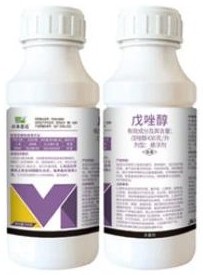
A flagship worth noting for context: tebuconazole 430 g/L SC is one of BNSD’s leading SC products, produced on dedicated suspension concentrate lines with batch-level quality control (company information). The full export range — fungicides, insecticides and granules across 99 SKUs — is listed in the BNSD product portfolio.
From Bottles to a Kit: Sida Gold Pack
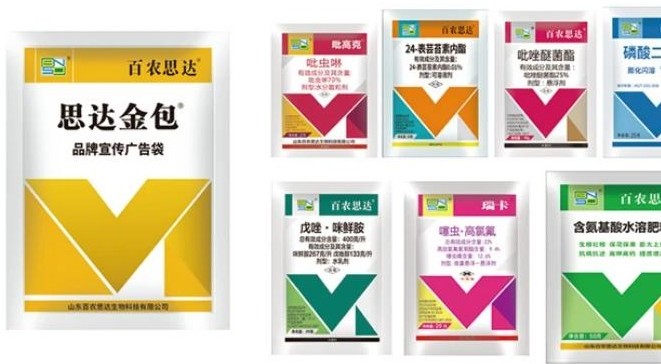
For growers who prefer a ready-made program over individual SKUs, BNSD offers the Sida Gold Pack — a wheat kit that combines insecticide, fungicide and nutrition components in one package, available in both manual-application and UAV versions (company information). Kits matter commercially because they translate the one-spray concept into a single purchase decision for the grower, and a single order line for the distributor.
UAV and Low-Volume Application Notes
Much of the one-pass program in China is now flown, not sprayed. For buyers positioning products for UAV (drone) programs:
- Low water volumes concentrate the tank. Formulations must disperse quickly and without excess foam at high dilution ratios.
- Test compatibility before recommending. Jar-test the full tank mix — fungicide + insecticide + nutrition — and apply promptly once mixed.
- Deposition is the challenge. Droplet spectrum and adjuvant choice drive coverage on vertical targets such as wheat heads; follow local guidance on water volumes and flight parameters.
- Format matters. SC and WDG formulations are generally a natural fit for drone work; EC-containing mixes need extra attention to emulsion stability.
BNSD’s formulation range — SC, WDG, EC and more — covers all of these formats, and the Sida Gold Pack is offered in a dedicated UAV version for this reason (company information).
FAQ
When exactly should the single spray go on?
The anchor is the FHB window: at or just after early anthesis. Aphid and foliar disease pressure usually align with the same window, which is what makes the combined pass work. Exact timing, water volume and repeat rules are set by local conditions and the product label.
Which product covers fusarium head blight alone?
Single-active triazoles such as tebuconazole 430 g/L SC are the traditional FHB choice. Combination products such as prothioconazole + tebuconazole 40% SC or pyraclostrobin + tebuconazole 30% SC add mildew, rust and green-leaf support in the same pass. The right choice depends on the disease profile of the season.
Can these fungicides be mixed with insecticides and foliar nutrition?
That is precisely the “three protections” tank mix. Compatibility should still be verified for each combination: jar-test the full mix, check for foam and precipitation, and apply without delay once mixed.
Is there a ready-made kit for UAV programs?
Yes. The Sida Gold Pack wheat kit is offered in manual and UAV versions, pairing disease, insect and nutrition components in one package (company information).
To review wheat fungicide specifications, request samples or discuss a program for your market, message the export team.
WhatsApp / WeChat: +86 199 0636 5856