
A plant virus cannot be sprayed away. Once a virus is systemic in a plant, no product cures it — management is entirely preventive: reduce the inoculum, block the insects that carry the virus from plant to plant, and strengthen the crop’s own defences so infections develop slower and lighter. That three-legged structure is what plant virus management means in practice, and it is also why a virus program is bought as a set of products, not as one bottle.
This guide builds that set from the BNSD Agro (Shandong Bainong Sida Biotechnology Co., Ltd.) Chinese registration labels for tomato and related crops: amino-oligosaccharin 5% AS as the immunity leg, and three vector-control legs — bifenthrin 2.5% EW for whitefly, thiamethoxam 25% WDG for thrips, acetamiprid 70% WDG for aphids — with sanitation and field hygiene around them.
Why Prevention Is the Only Play
Virus diseases differ from every fungal and bacterial disease in the grower’s experience:
- No curative product exists. An infected plant stays infected; at best it is rogued out, at worst it becomes a feeding station for the next wave of vectors.
- Vectors do the moving. Viruses rarely spread without their insect carriers — whiteflies transmit begomoviruses such as tomato yellow leaf curl virus, thrips carry tospoviruses like tomato spotted wilt virus, and aphids spread potyviruses and scores of others in minutes of probing.
- The economics are asymmetric. A vector spray costs little; a replant costs everything. Programs that hold vector pressure down all season outperform heroic late rescues every time.
The Immunity Leg: Amino-oligosaccharin 5% AS
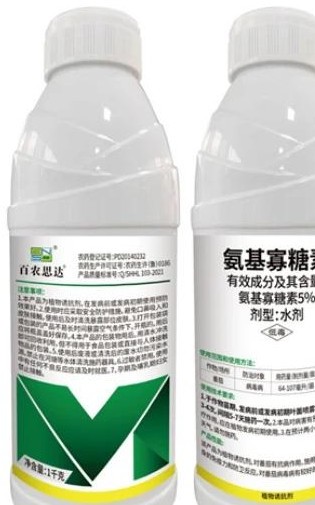
Amino-oligosaccharin is a microbial-source oligosaccharide that raises the plant’s own defence response — an immunity elicitor rather than a direct viricide. On the Chinese label, amino-oligosaccharin 5% AS is registered on tomato viral disease at 64–107 g per 667 m², packed in 1 kg×12 and 5 kg×4 cartons. Used on a schedule from early crop stages, it primes the plant so that virus replication and symptom expression develop more slowly in infected plants — buying time and reducing the virus pool that vectors pick up.
The Vector Legs: Three Insects, Three Registered Products
Whitefly: Bifenthrin 2.5% EW
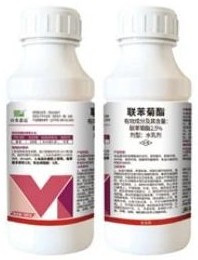
The Chinese label registers bifenthrin 2.5% EW on tomato whitefly at 30–40 mL per 667 m². The EW formulation carries a low solvent load and low odour, a crop-safety advantage on greenhouse tomatoes where whitefly pressure is continuous. Whiteflies are the vectors behind tomato yellow leaf curl and related begomoviruses, so the whitefly leg is the one that decides a tomato virus season.
Thrips: Thiamethoxam 25% WDG
The Chinese label registers thiamethoxam 25% WDG on welsh onion thrips at 10–20 g per 667 m² — the systemic neonicotinoid (IRAC group 4A) profile that also serves tospovirus vector control wherever the destination label allows. Thrips transmit tospoviruses as larvae feed and adults disperse, so thrips suppression has to start before flowering, when populations are still on the seedlings and weeds.
Aphid: Acetamiprid 70% WDG
The Chinese label registers acetamiprid 70% WDG against aphids at 1.5–2.5 g per 667 m². Aphids transmit viruses non-persistently — a brief probe is enough — so the aphid leg is about reducing probe frequency on young plants; at that dilution band, the WDG format gives a wide safety margin for seedling-stage use.
Program Summary
| Vector | Product (Chinese label reference) | Label rate | Viruses transmitted |
|---|---|---|---|
| Whitefly | Bifenthrin 2.5% EW (tomato whitefly) | 30–40 mL/667 m² | Begomoviruses, e.g. tomato yellow leaf curl |
| Thrips | Thiamethoxam 25% WDG (welsh onion thrips) | 10–20 g/667 m² | Tospoviruses, e.g. tomato spotted wilt |
| Aphid | Acetamiprid 70% WDG (aphids) | 1.5–2.5 g/667 m² | Potyviruses and many non-persistent viruses |
All rates are Chinese registration label rates; registered crops, pests and rates differ by country — always follow the destination-market label.
Sanitation, Mulch and Varieties
- Rogue early. Remove plants showing virus symptoms as soon as they appear, handle them last, and get them out of the crop — an infected plant left standing is a virus factory and a vector nursery.
- Clean the edges. Weeds and old crops around the field host both viruses and vectors; clearing them before transplanting removes the bridge population.
- Reflective mulch. Reflective (silver) mulch disorients aphids and whiteflies as they land, measurably delaying virus entry into the crop — a cultural leg that costs one laying operation.
- Nets and nursery hygiene. Insect-proof mesh on nursery and greenhouse vents keeps the vector pressure out of the most vulnerable plant stage; healthy, virus-tested seedlings are the cheapest insurance in the whole program.
- Resistant varieties. Where resistant hybrids exist for the viruses in your region, they set the ceiling on what the vector leg must hold — choose them first, then size the spray program.
Sourcing and OEM Notes
Bainong Sida holds 70 ICAMA registrations with about 60 pending and packs OEM orders from 10 mL to 40 kg. The elicitor and the three vector products are listed in the insecticides catalogue and fungicides pages; for samples, registration documents or program customization, contact the export team.
FAQ
Can a plant virus be cured once the crop is infected?
No — there is no curative spray for plant viruses. Management is preventive: an immunity elicitor such as amino-oligosaccharin 5% AS (Chinese label: tomato viral disease, 64–107 g/667 m²) primes the plant’s own defences, while vector control on whitefly, thrips and aphids slows new infections. Infected plants are removed, not treated. Your destination-market label governs.
Which insect should I target first for tomato virus disease?
Whitefly, for tomato yellow leaf curl virus — it is the dominant tomato virus–vector pair in most production regions. Bifenthrin 2.5% EW is registered on the Chinese label for tomato whitefly at 30–40 mL/667 m². In tospovirus areas, thrips control moves to the front; in fields with aphid-borne potyviruses, the aphid leg leads.
What does an immunity elicitor actually do?
It does not kill the virus directly. Amino-oligosaccharin is a microbial-source oligosaccharide that switches on the plant’s own defence pathways, so infections develop more slowly and symptoms stay lighter. That reduces the virus pool vectors can pick up — a population-level effect that complements, and never replaces, vector control.
How does reflective mulch help against plant viruses?
Reflected light disorients landing aphids and whiteflies, so fewer vectors probe the young crop during the establishment weeks when infections matter most. It is a one-operation cultural measure that delays virus entry, buying time for the immunity and vector legs to hold the line.
WhatsApp / WeChat: +86 199 0636 5856