
No stage of a crop dies as fast, or as completely, as the seedling stage. Damping-off can take a rice seedbed or a cucumber nursery tray overnight: seedlings that stood in the morning lie collapsed by afternoon, and by the end of the week whole sections of bed are bare. Because the pathogens live in the medium rather than on the plant, damping-off treatment is really soil-borne disease control — it starts before sowing, not after symptoms.
This guide covers the seedling-disease positions on BNSD Agro’s (Shandong Bainong Sida Biotechnology Co., Ltd.) Chinese registration labels: a metalaxyl + hymexazol aqueous solution for rice seedbeds, a fenaminosulf + thiram wettable powder for cucumber nursery soil, kasugamycin products for bacterial rots — plus the nursery hygiene that does half the work.
What Damping-off Actually Is
Damping-off is not one disease but a symptom shared by several unrelated soil pathogens: oomycetes such as Pythium and Phytophthora, and true fungi such as Rhizoctonia and Fusarium. Pre-emergence damping-off rots the seed before it surfaces; post-emergence damping-off attacks the stem at the soil line, constricting it until the seedling topples. Wet, poorly draining media, dense sowing and cool conditions favour the complex, and it spreads through water, trays and tools.
The practical consequence is that a single-site chemistry aimed at one pathogen group is rarely enough. Effective programs combine or rotate active ingredients with different spectrums — which is exactly how the registered products below are built.
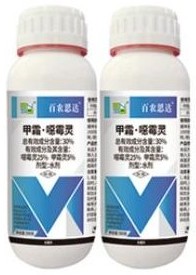
Rice Seedbeds: Metalaxyl + Hymexazol 30% aqueous solution (AS)
On the Chinese label, metalaxyl + hymexazol 30% AS is registered against rice seedling damping-off at 1.2–1.5 g/m² of bed area. The pairing is deliberate: metalaxyl is a phenylamide (FRAC group 4) with systemic, oomycete-specific activity against the Pythium and Phytophthora half of the complex, while hymexazol complements it against other seedling-rot pathogens.
The per-square-metre dosing is made for seedbed management: calculate the actual bed or tray area, apply uniformly in the indicated water volume, and keep the medium moist rather than saturated afterwards — standing water both favours the oomycetes and moves the fungicide out of the root zone.
Cucumber Nurseries: Fenaminosulf + Thiram 10% wettable powder (WP)
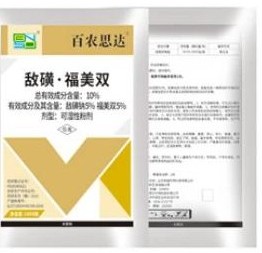
For cucumber nursery damping-off, the Chinese label registers fenaminosulf + thiram 10% WP at 1670–2000 g/667 m² as a soil treatment. The concept differs from a foliar spray: the dose is applied to the growing medium — incorporated or drenched according to the label — before or at sowing, building a protective zone around the seed and the young roots.
The two actives again cover different halves of the complex: fenaminosulf has a long history against the oomycete damping-off pathogens, while thiram is a multi-site protectant (FRAC group M) active against the fungal partners such as Rhizoctonia. Note that a 1670–2000 g per-mu rate is a bed-area calculation, not a spray-tank calculation — convert the dose to your actual nursery surface before ordering stock.
Bacterial Soft Rots: Kasugamycin per Label
Not every seedling rot is fungal. Bacterial soft rots produce water-soaked, slimy collapse that smells of decay, and they need an antibacterial, not a fungicide. Kasugamycin — a systemic antibiotic fungicide/bactericide — fills this role on BNSD Agro’s labels; the 6% WP registration line includes Chinese cabbage black rot at 25–40 g/667 m², with bacterial diseases covered per the destination label. Distinguishing bacterial from fungal rot before choosing a product saves an entire spray: fungal damping-off shows white or brown mycelium and firm lesions; bacterial rot shows wet, odorous slime.
Nursery Hygiene Does Half the Work
No fungicide compensates for a dirty nursery. The practices that keep seedling disease pressure down are universal:
- Use sterile, free-draining substrate and disinfected trays; never reuse trays that carried infected seedlings.
- Sow at moderate density — dense stands hold humidity and slow drying.
- Water in the morning and only as needed; the wettest media grow the worst damping-off.
- Ventilate to reduce leaf and surface moisture; remove diseased patches of seedlings together with the surrounding medium.
- Disinfect tools and benches between beds, and discard — do not transplant — collapsed seedlings.
Options at a Glance
| Situation | Product | Chinese label rate | Method |
|---|---|---|---|
| Rice seedling damping-off | Metalaxyl + hymexazol 30% AS | 1.2–1.5 g/m² | Bed application per label |
| Cucumber nursery damping-off | Fenaminosulf + thiram 10% WP | 1670–2000 g/667 m² | Soil treatment |
| Bacterial soft rot / black rot | Kasugamycin 6% WP | 25–40 g/667 m² | Foliar per label |
All rates are Chinese registration label rates. Registered crops, pests and doses differ by country — always follow the destination-market label.
Sourcing and OEM Notes
Bainong Sida holds 70 ICAMA registrations with about 60 pending, releases each batch against the registration standard by HPLC/GC, and supports OEM packing from 10 mL sachets to 40 kg drums across more than eight formulation types. The full range is in the fungicide catalogue; for samples, registration documents or private-label packing, contact the export team.
FAQ
What is the best treatment for damping off?
There is no single best — the pathogen complex varies by crop and medium. On the Chinese labels held by Bainong Sida: metalaxyl + hymexazol 30% AS at 1.2–1.5 g/m² for rice seedbeds, and fenaminosulf + thiram 10% WP at 1670–2000 g/667 m² as cucumber nursery soil treatment. Both combine actives with different spectrums, which is the point. Follow the destination-market label.
How much metalaxyl + hymexazol should I use per square metre?
The Chinese label rate for rice seedling damping-off is 1.2–1.5 g of the 30% AS product per square metre of bed, applied uniformly. Your destination-market label will state its own dose and water volume — it, not the Chinese figure, governs local use.
Is damping off fungal or bacterial?
Usually fungal or oomycete — Pythium, Phytophthora, Rhizoctonia and Fusarium are the classic causes — which is why fungicide soil treatment is the standard response. Bacterial soft rots are a separate, less common problem with wet, odorous slime, and they call for an antibacterial such as kasugamycin per the label.
How can damping off be prevented without chemicals?
Nursery hygiene does half the work: sterile substrate and disinfected trays, moderate sowing density, morning watering with good drainage, ventilation, and removing diseased patches with their surrounding medium. Chemical soil treatment is layered on top of these practices, not substituted for them.
WhatsApp / WeChat: +86 199 0636 5856