
An own-brand range is how many distributors defend margin, lock in customers and build an asset they can eventually sell. China’s contract-manufacturing ecosystem makes that accessible at almost any scale — but only if the buyer understands the three cooperation models, what a capable partner actually provides, and where quality and compliance checkpoints belong in the process. This guide walks through pesticide OEM in China from first inquiry to shipped container.
OEM, Toll Blending or Full Custom?
The three models are often blurred in conversation. They differ in who owns the technology and who carries the regulatory weight:
| Model | Who owns the formulation | Registration holder | Best for |
|---|---|---|---|
| OEM / private label | The manufacturer’s formulation | The manufacturer’s certificates | Fast market entry under your own brand |
| Toll blending (contract manufacturing) | The buyer’s formulation and inputs | Typically the buyer | Buyers with their own technology or off-patent packages |
| Full custom | Jointly developed | By agreement | Differentiated products for a specific market |
In a private-label OEM arrangement, the manufacturer supplies a product it already formulates and produces; you supply the brand, artwork and market. In toll manufacturing of agrochemicals, the plant processes your formulation or your materials for a processing fee. Full custom development — a new formulation built for your climate, crops and registration system — sits at the far end and requires R&D depth from the supplier.
What a Good OEM Partner Provides
The difference between a trader with a logo printer and a real OEM partner shows in the service stack:
- Formulation and R&D capability. The partner should adapt concentration, adjuvant system and packaging to your market — not just relabel a stock drum. Ask what their R&D function can prove.
- Registration support. Product registration in your destination country goes far more smoothly when the supplier holds the home-market certificates, can issue the right technical dossiers and understands the FAO/WHO specification framework that many registries reference.
- Packaging and artwork range. A serious plant handles everything from 10 mL sachets and bottles to 40 kg bags, and turns your artwork into compliant, print-ready labels — including multilingual and hazard-communication layouts.
- Export documentation and dangerous-goods handling. Formulations classed as dangerous goods need correct classification and papers. BNSD Agro, for example, handles DG Class 6.1 and Class 3 in-house and ships on FOB or CIF terms (company information).
- Inspection openness. The partner should accept SGS or buyer-arranged pre-shipment inspection as a standard clause, not as a favour.
- Clear commercial terms. BNSD’s published terms are representative of the industry norm: payment by T/T with a 50% advance, balance against shipping documents (company information).
The OEM Process, Step by Step
1. Inquiry and Product Definition
Define the product before anything else: active ingredient and target content, formulation type (SC, WDG, EC, EW and so on), pack sizes, destination market and registration status. A precise inquiry shortens every later step.
2. Formulation Development and Sample
The supplier’s lab develops or adapts the formulation and submits samples — sometimes several rounds, refining against your storage conditions, spray water and application equipment. Evaluate samples chemically and, ideally, biologically before approving.
3. Contract and Artwork
Sign a contract that annexes the full specification, pack sizes, labelling, tolerances, inspection rights and claims procedure. Submit print-ready artwork; the supplier should check it against hazard-communication and local labelling requirements before printing.
4. Production
Production runs against the approved sample and specification, with raw materials released by incoming QC. Batch records and batch numbers on packaging link every drum to its production history.
5. QC and Inspection
Each batch is tested — on HPLC and GC for content and relevant physical parameters — and a batch-specific COA is issued. Pre-shipment inspection by SGS or your own inspector verifies the lot against the contract before loading.
6. Shipment and Documents
The supplier prepares export documentation — commercial invoice, packing list, and dangerous-goods papers where the classification requires them — and ships FOB or CIF as contracted. Keep sealed reference samples from the loaded lot.
MOQ and Lead-Time Expectations
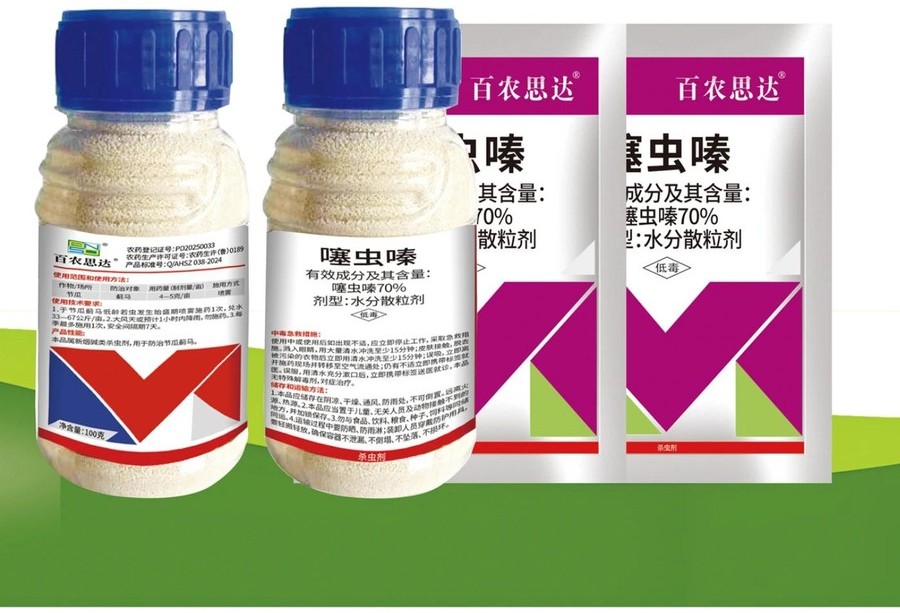
There is no universal MOQ in private label pesticide manufacturing: it depends on the formulation type, the packaging format, the size of your artwork print run and whether the product is a catalogue item or a contract production. Contract productions in custom packaging naturally carry larger minimums and longer lead times than catalogue products relabelled from existing stock packaging. Likewise, lead times move with campaign scheduling, raw-material procurement and the complexity of the pack. The practical advice: disclose your season dates and target volumes at the inquiry stage, and get the production window written into the contract rather than promised in an email.
Quality and Compliance Checkpoints
Build these into the contract so they are enforceable, not aspirational:
- A written specification annex — content, formulation, physical parameters, packing.
- Batch-level COAs with batch numbers matching the packaging.
- Retention samples kept by both parties for the claims window.
- Third-party inspection rights (SGS or your own inspector) before loading.
- Dangerous-goods documentation for Class 6.1 and Class 3 products.
- Label compliance review against your destination market’s rules.
Why the Shandong Cluster Matters
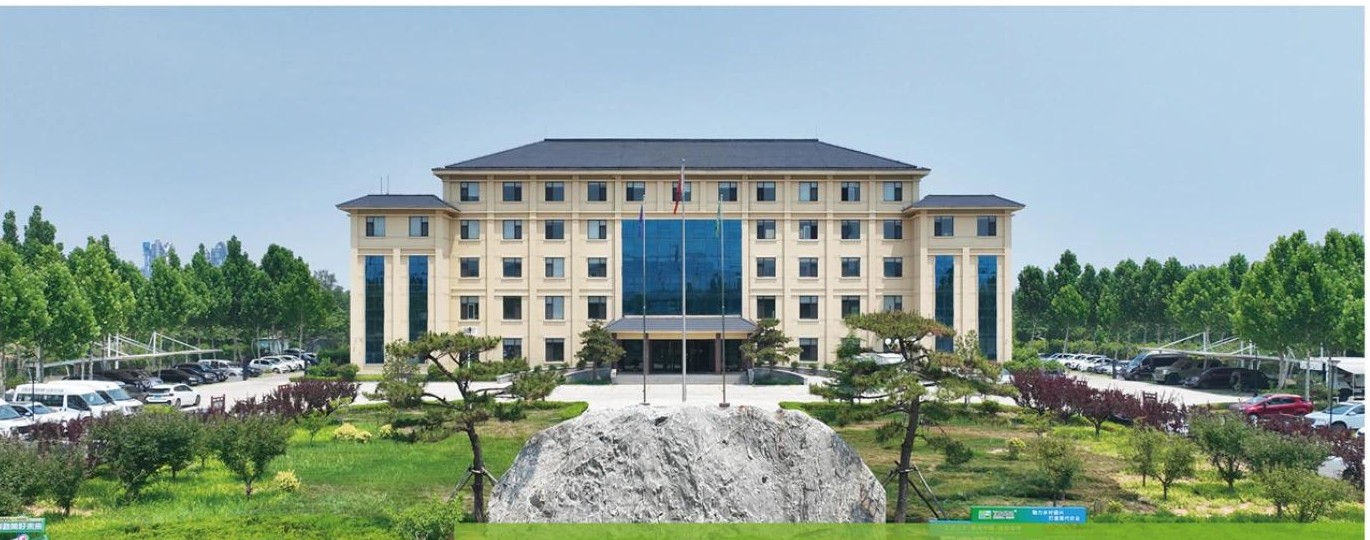
Shandong is one of China’s core crop-protection manufacturing regions, with a dense industrial chain of active-ingredient producers, intermediate suppliers, packaging makers and freight forwarders experienced in dangerous goods. A plant inside that cluster shortens supply lines, reduces single-source risk on inputs, and solves formulation problems faster because the expertise is nearby. BNSD Agro sits in Qingzhou Economic Development Zone, Weifang, in the middle of that industrial base.
BNSD Agro’s OEM Capability
BNSD (Shandong Bainong Sida Biotechnology Co., Ltd., founded 2003) states that it offers toll blending and OEM services across more than 8 formulation types, with packing from 10 mL to 40 kg, R&D and registration support, SGS or buyer inspection, FOB/CIF shipping, T/T payment with 50% advance, and in-house DG handling for Classes 6.1 and 3 (company information). Its R&D center employs 60+ staff and works with Shandong Academy of Agricultural Sciences, Nankai University, Shandong Agricultural University and Qingdao University. Production rests on six air-mill WDG/WP lines, two SC lines, five EC/SL lines and a new 8,000 t/a digitalized WDG plant, backed by an automated high-rack warehouse, HPLC and GC laboratories with batch-level QC, and ISO 9001/14001/45001 certification. The export catalogue of 99 SKUs on the products site — from flagship tebuconazole 430 g/L SC and thiamethoxam 70% WDG to the Sida Guard mediated-fertilizer granules — doubles as a formulation menu for own-brand projects. Discuss your brief with the export desk via the OEM page or the contact page.
FAQ
What is the difference between OEM and toll blending in pesticides?
OEM puts the manufacturer’s existing, registered formulation into your brand; toll blending processes your formulation or your materials for a fee. In OEM the supplier carries the formulation technology; in toll blending you do. Which one fits depends on whether you own the technology or just the brand.
Can a Chinese OEM partner support registration in my country?
A capable one can. Look for home-market registrations held by the supplier, experience preparing technical dossiers for export registries, and familiarity with FAO/WHO specifications. BNSD, for instance, points to its 70 ICAMA registrations and university-linked R&D center as the base for registration support (company information).
How long does a private-label project take from inquiry to shipment?
It depends on the model and packaging: catalogue products in existing packs move fastest, while contract productions with custom artwork and new pack formats take longer. Agree the production window in the contract and build your ordering calendar around your spraying season, not around the supplier’s convenience.
What should I test before approving an OEM sample?
Chemical content against the target specification, physical stability under your storage conditions, compatibility with your local spray water and tank-mix partners, and — for biological confidence — a field or greenhouse trial in your own market.
WhatsApp / WeChat: +86 199 0636 5856