
Plant growth regulators generate a different kind of enquiry from fungicides or insecticides. Buyers rarely ask whether the product “kills” anything — they ask what it actually does in the plant, which dilution to use on which crop, and what to pair it with during cold snaps or after stress. This guide answers those questions for 24-epibrassinolide (the active marketed as brassinolide), using the registered crops and dilution rates on file at BNSD Agro (Shandong Bainong Sida Biotechnology Co., Ltd.).
What Brassinosteroids Do in the Plant
Brassinosteroids are a class of plant hormones — signalling molecules the plant itself produces in trace amounts, first identified from rapeseed pollen. 24-epibrassinolide is one of the most active members of the class and the one most widely registered for agricultural use. Based on well-established plant physiology, its value in the field rests on three functions:
- Growth support. Brassinosteroids promote cell division and cell elongation, which is why treated crops often show improved uniformity of canopy and fruit set rather than dramatic size gains.
- Chlorophyll and photosynthesis. Applications are associated with maintained or increased chlorophyll content, helping a crop hold its leaf area through stress periods.
- Stress recovery. This is the headline use. Brassinosteroids help plants recover from cold injury, drought, salinity and pesticide phytotoxicity by supporting membrane stability and the plant’s own stress responses.
The critical property for users: brassinosteroids work at extremely low concentrations. A 0.01% product diluted 2000–3000 times delivers an active concentration measured in fractions of a milligram per litre — and that is precisely the point. More is not better; the effective window is narrow, and exceeding it does not improve results.
Registered Rates: The Chinese Label at a Glance
BNSD Agro produces 24-epibrassinolide 0.01% with four registered crop uses on the Chinese label:
| Crop | Dilution (water) | Registered role |
|---|---|---|
| Wheat | 2000–2500× | Stress recovery, chlorophyll support |
| Rice | 2000–3500× | Stress recovery, chlorophyll support |
| Citrus | 2500–3000× | Stress recovery, chlorophyll support |
| Cucumber | 2000–3000× | Stress recovery, chlorophyll support |
All rates quoted here are Chinese registration label rates. In your own market, always follow the destination-market label — registration scopes and rates differ by country.
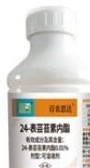
Why such high dilutions
Compare these dilutions with a typical fungicide spray at 500–1500× and the difference is immediately visible. A brassinolide application is a signal dose, not a cover dose. Two practical consequences follow:
- Measuring accuracy matters more than for any other spray tank partner. At these concentrations, a measuring error that would be trivial with a fungicide can double or halve the intended dose. Dosing sachets or calibrated cups, not “a splash”, are the right approach.
- The product is a program component, not a standalone treatment. It contributes most when the crop also has the nutrition to rebuild with — which is where the companion products below come in.
Building a Stress-Recovery Program Around Brassinolide
A hormone signal tells the plant to mobilise; nutrition supplies the material. The BNSD Agro nutrition range (company information) is built around exactly this pairing:
- Anti-freeze nutrition solution (amino-acid based). Applied before a cold front arrives, it raises the plant’s readiness for low temperatures. In a cold-protection spray, brassinolide and the anti-freeze solution address the signal and the substrate at once.
- Amino-acid water-soluble fertilizer. Amino acids provide readily available organic nitrogen and support recovery when root uptake is still limited by cold or wet soil — the classic situation after a cold snap or waterlogging.
- Potassium phosphite 0-520-340. With P₂O₅ at 520 g/L or above and K₂O at 340 g/L or above, potassium phosphite supplies high-analysis phosphorus and potassium and is widely used alongside disease programs, with recognised support against oomycete pathogens (general agronomy knowledge).
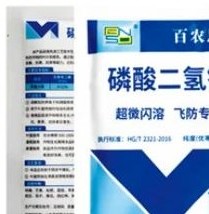
In practice, distributors position these as one program: brassinolide plus anti-freeze solution before a forecast cold front; brassinolide plus amino-acid fertilizer after stress is visible; potassium phosphite through the fruiting period where oomycete pressure (downy mildew, late blight) is a standing concern. The full nutrition range is listed in the nutrition and PGR catalogue.
Sourcing a Brassinolide Product: What Separates Suppliers
Because the active content is so low, quality problems are harder to see and therefore easier to pass on to the farmer. Buyers evaluating a PGR supplier should check:
- Content as a registered value. 0.01% is a registered content, not a marketing range. The certificate of analysis should state the actual measured content for the batch.
- Homogeneity. A few grams of active distributed across a pack must be uniform. Poorly mixed product delivers sachets that vary from batch and within a batch.
- Batch release testing. BNSD Agro releases every batch against the registration standard via HPLC/GC before shipment (company information). Ask any prospective supplier to describe their release procedure in the same terms.
- Program completeness. A supplier who can offer the PGR together with the amino-acid and phosphite partners saves the importer a second sourcing exercise and guarantees the products were formulated to be used together.
For samples, registration documents or OEM packing of the PGR and nutrition range, contact BNSD Agro.
FAQ
What is 24-epibrassinolide used for?
Stress recovery and crop strengthening. On the Chinese labels held by BNSD Agro, 24-epibrassinolide 0.01% is registered on wheat (2000–2500×), rice (2000–3500×), citrus (2500–3000×) and cucumber (2000–3000×) for stress recovery and chlorophyll support. Field teams most often position it around cold events, pesticide stress and key growth stages. Always follow the destination-market label.
Can brassinolide be mixed with fertilizers and pesticides?
Brassinolide is commonly tank-mixed with foliar fertilizers and crop-protection products — it is in fact used most often as a tank-mix partner rather than alone. That said, compatibility is formulation-specific: run a jar test with the exact products at the intended concentrations before large-scale mixing, and follow the tank-mix guidance of each product label.
How often should brassinolide be sprayed?
Follow the label and local agronomic advice rather than a fixed calendar. Because brassinosteroids act as signals, repeated application without a stress event or growth stage to support adds cost without benefit. The usual positions are before a forecast cold front, after visible stress, and around flowering or fruit set when the crop’s demand peaks.
Is brassinolide the same as 24-epibrassinolide?
“Brassinolide” is the common trade shorthand, but the registered active here is 24-epibrassinolide — a specific, highly active brassinosteroid. When comparing supplier offers, check the active ingredient name on the registration certificate, not the trade name: products sold as “brassinolide” can differ in the actual brassinosteroid they contain.
WhatsApp / WeChat: +86 199 0636 5856