
Every distributor has run the arithmetic: import a pesticide in 200-litre drums or bulk bags, decant it locally into one-litre bottles, and pocket the difference between factory retail packing and a filling line at home. On the proforma invoice the numbers can look persuasive. What the arithmetic leaves out is everything that happens after the drum is opened — licence requirements, moisture, contamination, broken batch traceability, and a brand that starts varying from batch to batch. This guide sets out the full ledger.
The Bulk-Import Temptation
The logic is straightforward. Packaging material and packing labour cost money at the factory, and small retail packs occupy more container volume per kilogram of product than drums do. Importing bulk and repacking locally seems to cut both, while shortening the lead time on small replenishments. In specific, licensed situations the logic can even hold. The problem is that for most importers, most of the time, the three risk lines below never make it into the calculation.
Risk One: Regulatory
In many jurisdictions, repacking a pesticide is legally a manufacturing step. Local rules commonly require a packing or filling licence, approved premises, label compliance for every repacked unit, and traceability from the repacked pack back to the source batch. Decanting a registered product without that licence can put both the goods and the registration at risk — and the liability lands on the importer, not on the overseas factory. Before pricing a bulk-and-decant model, the first call is to your local regulator, not to a filling-line supplier. Rules differ by market; nothing here substitutes for the licence requirements of your own.
Risk Two: Quality
Factory packing is the last controlled environment the product sees before the farmer. A local decanting line is often the first uncontrolled one:
- Moisture. Water-dispersible granules (WDG) and wettable powders (WP) are hygroscopic. Opened in humid air, they pick up moisture that shows up later as caking and poor dispersion in the tank.
- Contamination. Filling lines shared with other products — or simply not built to pesticide hygiene standards — leave residues, dust and cross-contamination in the pack.
- Active loss and exposure. Some actives are volatile or degradation-sensitive; every transfer and every open window is exposure the formulation was not designed for.
- Physical stability. SCs and EWs are suspensions and emulsions balanced for static storage. Rough handling, temperature swings and unpadded pumping during decanting can break them.
- Broken traceability. The batch number printed on the original pack is what ties the goods to their COA and to the factory’s retention sample. Once product is decanted into anonymous local bottles, that chain is gone — and with it, the evidence base for any future claim.
Risk Three: Brand Inconsistency
Factory packs arrive with consistent print, seals, colours and leaflets — the same face on every batch, in every shop. Local repacking replaces that with whatever the local line can produce that month: label variance, weaker seals, hand-applied caps. Distributors spend years building brand preference; inconsistent presentation quietly undoes it, and it invites look-alike products into precisely the shelf space you paid to occupy.
What Factory Packing Delivers
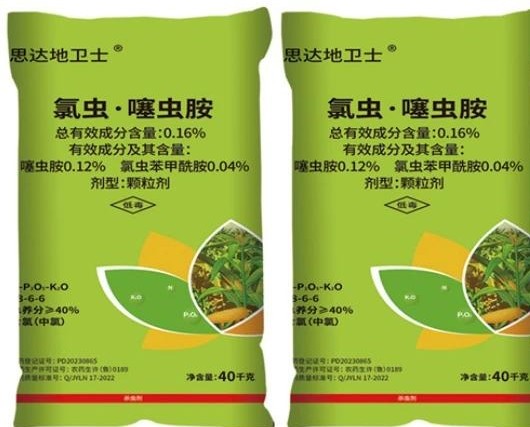
Factory packing is not just a cost line — it is the controlled step the quality system ends with. Sealed original packs with leaflets leave the line with batch numbers, tested pack integrity and traceability intact. The format range is wider than many importers assume: BNSD Agro packs its products in formats from 10 mL sachets and bottles up to 40 kg bags and drums (company information), so the “bulk advantage” is often available without leaving the factory — retail formats for the trade counter, mid packs for the professional segment, bulk formats for large farms and institutional supply. For distributors who want their own brand, OEM and private-label programs put the buyer’s label on factory-packed goods, with the packing done where the quality system lives. The current product range shows pack formats per SKU.
When Local Repacking Still Makes Sense
A balanced ledger includes the cases where bulk genuinely wins. Licensed local formulators import technical material and build formulations under their own registrations — a different business model with different economics, and a legitimate one. Very large agricultural operations or institutional buyers with licensed in-house facilities sometimes repack for their own use. And in some markets, duty or freight structures favour bulk movement. If repacking is the plan, the sequence is fixed: licence first, controlled and dedicated facilities second, validated packaging third, and batch traceability preserved end to end — then, and only then, the filling line.
For pack-format options on specific SKUs, or an OEM program built around your market, contact the export desk — the OEM guide explains how private-label packing works.
FAQ
Is it legal to import pesticide in bulk and repack it locally?
It depends on your market — and in many of them, repacking is treated as a manufacturing step requiring a packing or filling licence, approved premises and compliant labelling. Check the licence requirement with your local regulator before building a bulk-import plan; the answer determines everything downstream.
Why do water-dispersible granules suffer most from repacking?
WDGs are engineered for flowability and rapid dispersion, and they are hygroscopic: exposed to humid air during decanting, they absorb moisture and later cake in the pack, losing dispersion in the tank. Powders behave similarly; sealed factory packs keep the moisture out until the moment of use.
Doesn’t bulk import still save money overall?
Sometimes — in licensed, controlled, high-volume situations the arithmetic can work. What breaks the model for most importers is unpriced cost: licence and facility compliance, quality losses, a broken evidence chain when claims arise, and brand damage from inconsistent presentation. Price those in before comparing with factory-packed quotes.
Can the factory supply small retail packs instead?
Yes. Factory packing runs from 10 mL sachets and bottles up to 40 kg bags and drums (company information), with leaflets and labels produced for the destination market. Retail-format packing at the factory is usually the cheaper route to small packs — without opening a drum anywhere.
WhatsApp / WeChat: +86 199 0636 5856