
Ask for lufenuron and the conversation immediately becomes a question about partners. As a chitin synthesis inhibitor it works like nothing else in the insecticide shelf — and just as deliberately, it works slowly, which is why in the BNSD Agro (Shandong Bainong Sida Biotechnology Co., Ltd.) range it is never sold alone: it comes paired with a fast-acting partner in two registered suspension concentrates, one with chlorfenapyr and one with emamectin. This guide explains the mode of action behind that pairing, the Chinese label rates for beet armyworm and diamondback moth, how to decide when a lufenuron combo is the right buy, and where IRAC 15 sits in a rotation. The insecticide range sits on the insecticides page, and samples or registration documents are available through the contact page.
What Is Lufenuron?
Lufenuron is a benzoylurea insecticide in IRAC group 15 — the chitin synthesis inhibitors (CSIs). Insects depend on chitin to build every new cuticle, so a CSI does not poison the nervous system or the respiration chain; it blocks the construction material for moulting. The visible consequences define how the molecule is used:
- Slow kill, no knockdown. Treated larvae stop progressing and die at the next moult, so field results build over days rather than hours. There is no dramatic drop-count the way there is with a pyrethroid or a diamide.
- Ovicidal activity. Lufenuron reaches eggs as well as larvae, which is why CSI sprays are timed against the egg and early-larval stages of the pest cycle.
- A narrow, Lepidoptera-centred profile. The activity concentrates on caterpillar pests, which is exactly what vegetable and brassica programs need when they want to leave beneficials and non-targets alone.
That slow profile is not a defect — it is the reason the molecule persists so long in the crop and puts so little selection pressure on anything but the moulting process. But it does mean the buyer’s real question is not “which lufenuron?” but “which partner?”
Registered Uses: Two Combo SCs
In the BNSD Agro range, lufenuron is registered in China inside two combination products:
| Product | Registered target (Chinese label) | Label rate |
|---|---|---|
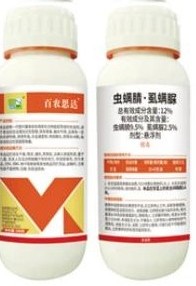
| 12% chlorfenapyr + lufenuron SC | Beet armyworm | 25–42 g/667 m² |
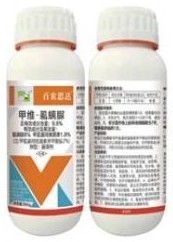
| 9.8% emamectin + lufenuron SC | Diamondback moth | 10–15 mL/667 m² |
All rates are Chinese registration label rates; 667 m² equals one mu, roughly 1/15 hectare. In your own market the destination label governs — registration scope and rates differ country by country, so treat these figures as a positioning reference, not a spray recipe for another jurisdiction.
Why Pair a Slow Kill with a Fast Partner
Both registered pairings answer the same complaint about CSIs — “too slow” — by splitting the job:
12% chlorfenapyr + lufenuron SC (beet armyworm, 25–42 g/667 m²). Chlorfenapyr is a fast-acting pyrrole that collapses energy metabolism in treated larvae; lufenuron then holds the plot down afterwards, hitting the eggs and the late-hatching larvae the first wave misses. Beet armyworm outbreaks are the classic emergency: populations can strip a canopy in days, so speed is non-negotiable, and persistence against the follow-up generations is what actually ends the cycle.
9.8% emamectin + lufenuron SC (diamondback moth, 10–15 mL/667 m²). Emamectin benzoate stops feeding quickly through stomach action, protecting the crop immediately; lufenuron extends the interval and covers the egg cohort. Diamondback moth is the archetype of a resistance-prone, short-generation pest where two unrelated modes of action in one pass are worth more than either active alone.
In both cases the commercial logic is identical: one spray, one invoice, and a result that is fast enough to be visible and persistent enough to last.
When a Lufenuron Combo Makes Sense
Choose a lufenuron pairing when three conditions hold at once:
- The pest is a caterpillar. Beet armyworm, diamondback moth and other Lepidoptera are where the molecule earns its keep.
- The spray can be timed early. CSIs reward the grower who sprays at egg-lay and early larvae; a rescue spray three instars late will disappoint, whichever partner is in the tank.
- The program needs a third or fourth mode of action. If the season’s plan already leans on IRAC 6 (emamectin, abamectin) or IRAC 28 (chlorantraniliprole) products, a combo that carries IRAC 15 inside a fast partner adds a fresh group without adding a pass.
Where outbreaks demand pure knockdown and no residual planning, a single fast active may be simpler. Where the pest cycles repeat through the season — which is the normal case in vegetable belts — the paired product is the more economical tool.
Rotation: Where IRAC 15 Fits
Chitin synthesis inhibitors are low-to-moderate resistance risk, but the discipline is the same as for any single-site group:
- Limit consecutive IRAC 15 applications per crop cycle and per generation of the pest; treat lufenuron as a scheduled tool, not a repeat spray.
- Rotate across unrelated groups — IRAC 6 (emamectin, abamectin), IRAC 28 (chlorantraniliprole class), IRAC 13 (chlorfenapyr), IRAC 22A (indoxacarb) — or let the registered combos deliver the rotation in the same pass, as the two products above do.
- Judge results at the moult, not at 24 hours. Field teams should assess treated larvae at the next instar; otherwise a working CSI looks like a failure and gets rotated out unnecessarily.
Sourcing an Insecticide SC: Buyer Checklist
A suspension concentrate is a solid active dispersed in a liquid phase, so quality is physical as much as chemical:
- No crystallisation. The active must stay evenly dispersed through hot and cold shipping cycles; recrystallised particles scorch leaves and block nozzles.
- Suspensibility after dilution. Uniform for the whole spray job with gentle agitation — no hard sediment, no layering.
- Content released by HPLC against the registration standard. Two actives means two assays. At BNSD Agro every batch is analysed by HPLC or GC and released against the registration standard before shipment (company practice).
- Viscosity and pouring behaviour. Over-thick SCs pour badly, foam in the tank and short-weight on the filling line.
- Documents and pack ladder. Pesticide registration certificate, production licence and batch traceability in the supplier’s own name, with pack sizes agreed in the contract.
FAQ
What is lufenuron registered for in China?
In the BNSD Agro range, lufenuron appears in two combos: 12% chlorfenapyr + lufenuron SC for beet armyworm at 25–42 g/667 m², and 9.8% emamectin + lufenuron SC for diamondback moth at 10–15 mL/667 m². Destination-label terms govern in your market.
Why is lufenuron slow, and is that a problem?
Lufenuron blocks chitin synthesis, so larvae die at the next moult rather than dropping within hours. That is inherent to IRAC 15, and it buys long residual and ovicidal activity in exchange. In the registered combos the fast partner covers the speed while lufenuron covers the persistence.
When should a buyer choose a lufenuron combo?
When the target is a caterpillar, the spray can be timed against eggs and early larvae, and the seasonal program needs an additional mode of action without an extra pass. For pure knockdown emergencies, a single fast active may be the simpler choice.
How should IRAC 15 be rotated?
Cap consecutive group 15 applications per crop cycle, rotate with unrelated groups such as IRAC 6, 13, 22A or 28, and evaluate efficacy at the next larval moult rather than 24 hours after spraying.
WhatsApp / WeChat: +86 199 0636 5856