
China sits at the centre of the global crop-protection supply chain. Importers who source pesticides there gain access to manufacturers with deep formulation capability, large registration portfolios and production capacity that few markets can match. The trade is regulated at both ends, however: products must satisfy Chinese export requirements as well as the registration rules of the destination market, quality must be verified batch by batch, and many formulations ship as dangerous goods.
This guide sets out the pesticide import process steps from a manufacturer’s vantage point.
Why Buyers Source Pesticides from China
Three structural advantages explain why distributors and formulators keep returning to Chinese suppliers.
Formulation capability. Modern crop protection is as much about formulation chemistry as about active ingredients. Established Chinese plants produce the full range of commercial forms — suspension concentrate (SC), water-dispersible granule (WDG), wettable powder (WP), emulsifiable concentrate (EC), oil-in-water emulsion (EW), micro-emulsion (ME), soluble concentrate (SL), aqueous solution (AS), granule (GR), oil dispersion (OD) and soluble powder (SP) — and increasingly compete on formulation quality rather than price alone.
Registration depth. A supplier’s registration portfolio determines what it may ship and how quickly it can serve a new market. Shandong Bainong Sida Biotechnology Co., Ltd. (BNSD Agro), a national-designated pesticide manufacturer founded in 2003 in Qingzhou, Weifang, Shandong, holds 70 ICAMA registrations with a further 60 pending, covering flagship products such as tebuconazole 430 g/L SC and thiamethoxam 70% WDG.
Capacity and consistency. BNSD Agro operates six air-mill WDG/WP lines producing about 20 tonnes of powder a day, two SC lines at roughly 8,000 litres a day and five EC/SL lines at about 20,000 litres a day, plus a new digitalized 8,000-tonne-per-year WDG plant commissioned in 2025. An automated high-rack warehouse and in-house HPLC and GC laboratories underpin batch-level quality control.
The steps below assume you are dealing with a manufacturer of this type, not an intermediary.
Step 1: Define Your Products and Formulation Requirements
Start from a written specification, not a loose enquiry. At minimum it should state:
- the crop, target pest or disease, and destination market;
- the active ingredient, content and formulation type required;
- pack sizes, label language and any local registration constraints;
- the volume you can commit to in the first year.
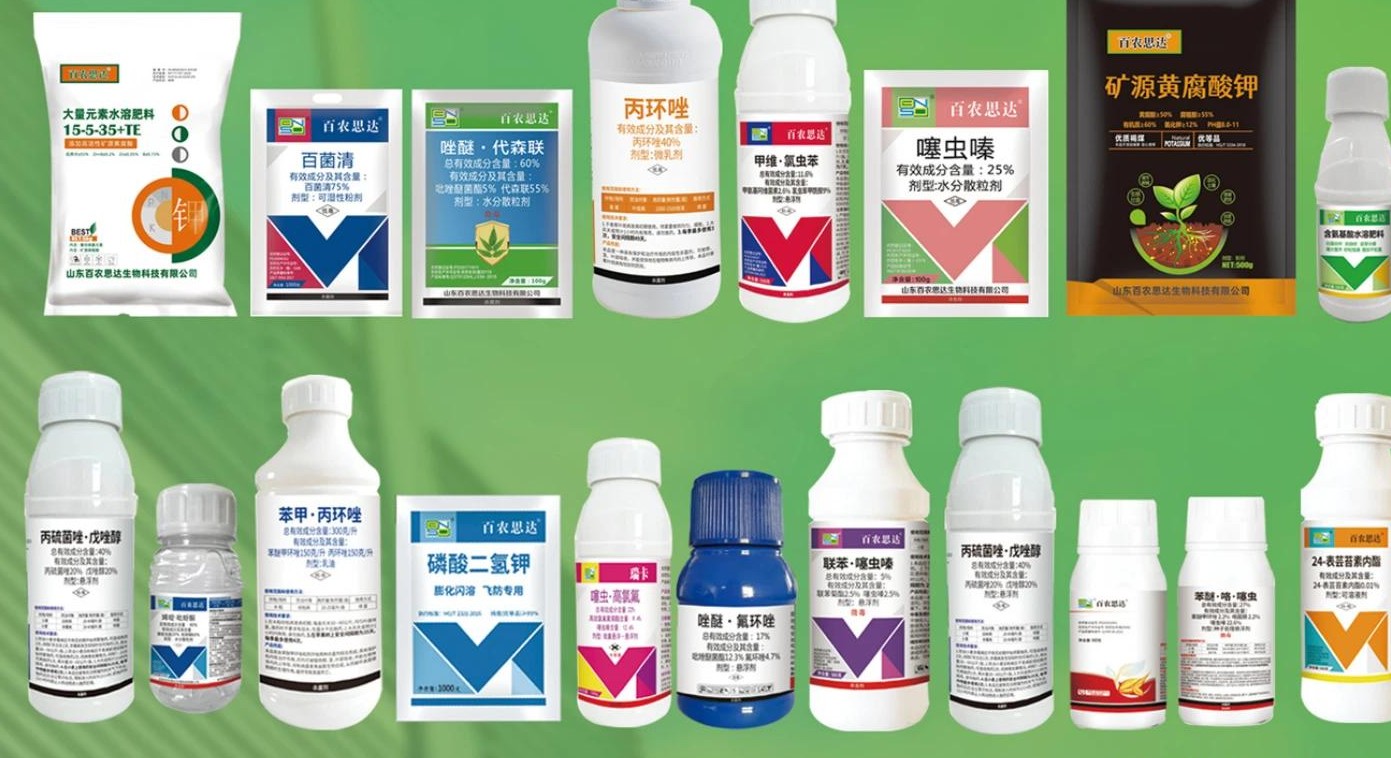
A structured catalogue shortens this stage considerably. The BNSD Agro export portfolio lists 99 SKUs across fungicides, insecticides and acaricides, herbicides, insecticide–fertilizer granules, plant nutrition and bundled crop programs such as the Sida Gold Pack. Flagship registrations include prothioconazole + tebuconazole 40% SC, pyraclostrobin + tebuconazole 30% SC and difenoconazole + propiconazole 300 g/L EC. For buyers combining soil-pest control with base fertilization, the Sida Guard mediated-fertilizer range pairs 0.16% chlorantraniliprole + clothianidin granules with NPK grades in 40 kg bags. Where no standard product fits, OEM and toll manufacturing covers more than eight formulation types in packs from 10 mL to 40 kg.
Step 2: Verify the Manufacturer
The most common error is treating a trading company as a factory. Verify the entity that will actually produce your goods. Documents to request:
- Pesticide registration certificate — the ICAMA registration for each product, showing holder, product name, content and formulation;
- Pesticide production licence — the statutory licence for manufacturing pesticides in China;
- ISO certification — ISO 9001 (quality), ISO 14001 (environment) and ISO 45001 (occupational health and safety);
- Laboratory evidence — HPLC/GC instrumentation and batch-level QC records.
BNSD Agro sets out its credentials on the company profile page: the three ISO certifications listed above; an R&D center of more than 60 staff; research partnerships with the Shandong Academy of Agricultural Sciences, Nankai University, Shandong Agricultural University and Qingdao University; and a listing on the Qilu Equity Trading Center. In 2025 the company reported RMB 577 million in sales, ranking No. 32 among China’s formulation enterprises, and was recognized as a “Shandong Manufacturing Single Champion”; its Ruika 22% thiamethoxam + lambda-cyhalothrin SC was named a “Lu Chain Premium Product”.
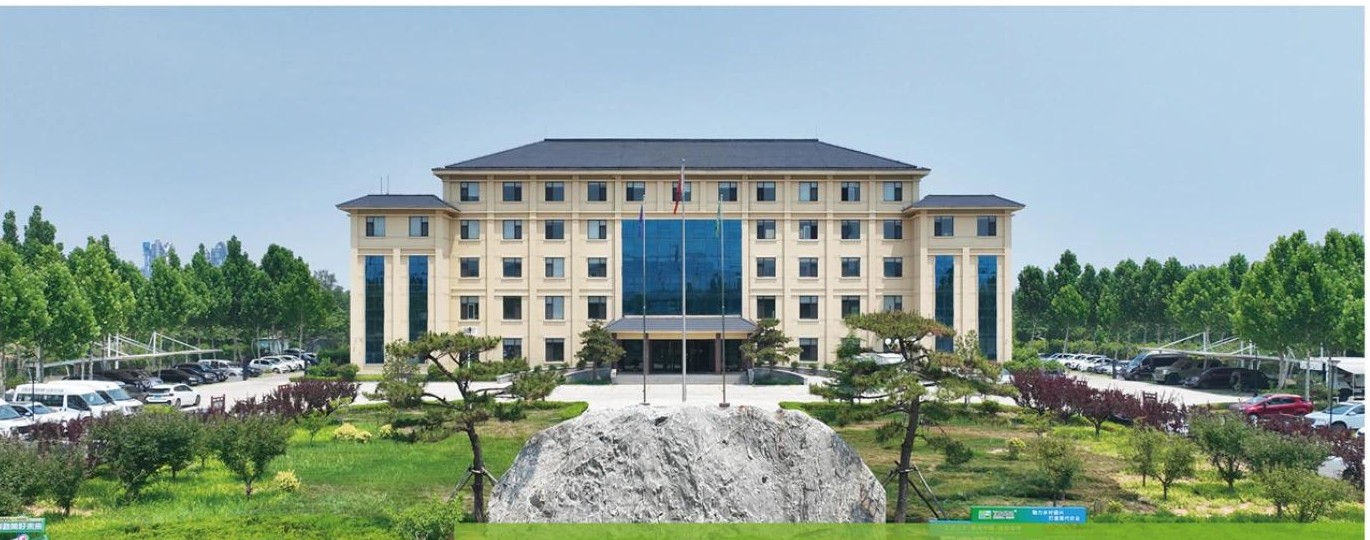
Finish with a video call or plant visit: inspect the filling lines, warehouse and laboratory, not just the meeting room.
Step 3: Registration and Documentation Responsibilities
Destination-market registration is the importer’s duty
Chinese export papers do not replace registration in your market. In virtually every jurisdiction the importer of record is responsible for ensuring a product is registered or otherwise permitted before sale — including data packages, local-language labels and, in many countries, a local representative. Some manufacturers assist actively: BNSD Agro provides registration support to OEM clients, including technical data, samples and documentation. Agree in writing who prepares what, and file before committing to commercial volumes.
Chinese export documents
For the export leg, expect the standard trade set — commercial invoice, packing list, bill of lading, certificate of origin and a batch certificate of analysis — together with the product-specific papers Chinese authorities require for pesticide shipments. An experienced manufacturer prepares these routinely and confirms destination-specific requirements early in the order.
Step 4: Quality Control Before Shipment
Quality failures cost far more when discovered after arrival. Build the inspection into the contract:
- Batch COA. Every batch should ship with a certificate of analysis from the producer’s own HPLC or GC laboratory, covering active-ingredient content and key physical parameters.
- Third-party inspection. SGS or an inspector of the buyer’s choice can witness production, draw samples and test against the agreed specification; BNSD Agro accepts SGS or buyer inspection as standard practice.
- Pre-shipment checks. Verify appearance, packaging integrity, batch coding and label compliance against the registered or agreed artwork.
- Retained samples. Keep reference samples from each shipment for the life of the stock.
For WDG and WP, check suspensibility and wettability; for SC and EC, check appearance after hot and cold storage. These are the parameters that separate professional formulators from simple repackers.
Step 5: Shipping and Payment
Incoterms: FOB or CIF
| Incoterm | Seller handles | Buyer handles | Best suited to |
|---|---|---|---|
| FOB | Export clearance and delivery on board at the Chinese port | Ocean freight, insurance, destination charges | Buyers with their own freight contracts |
| CIF | FOB plus ocean freight and insurance to the named port | Import clearance, duties, on-carriage | First-time importers and smaller shipments |
Dangerous goods
Many formulations are classified as dangerous goods in sea transport. BNSD Agro handles Class 6.1 (toxic substances) and Class 3 (flammable liquids) routinely, but the buyer’s forwarder must also be DG-capable, with correct UN numbers, packaging and declarations. Confirm the DG status of each product before quoting freight.
Payment terms
Telegraphic transfer is the working standard in this trade. BNSD Agro invoices on T/T terms with a 50% advance, the balance schedule being agreed in the contract. Keep the first order simple: a signed proforma invoice, a fixed specification sheet and an inspection clause settled before the advance is paid.
Step 6: After-Sales Support and Reorders
A first shipment is a test. Before scaling, evaluate the supplier on three points:
- Technical follow-up. Access to agronomists and formulation chemists when field questions arise — a strength of R&D-driven manufacturers.
- Traceability. Batch records that allow any field complaint to be traced back to a production record.
- Production planning. Place forecasts early. Capacity at strong manufacturers is booked seasons ahead; BNSD Agro’s 2026 mediated-fertilizer order book already includes a single RMB 200 million export order.
Buyers who consolidate volumes with one manufacturer typically gain priority scheduling, steadier formulation support and cleaner documentation across seasons.
Frequently Asked Questions
How do I verify that a China pesticide supplier is a real manufacturer?
Ask for the pesticide production licence and the ICAMA registration certificates in the supplier’s own name, and confirm that the production address matches the factory. ISO certificates, laboratory equipment and a plant visit — in person or by video — complete the check. A manufacturer’s About page should answer most of these questions before you ask.
Do I still need to register the product in my own country?
Yes. Chinese export documents do not replace destination-market registration. The importer of record is normally responsible for registration, labelling and import permits, so choose a supplier able to provide technical data, samples and supporting documents for your dossier.
Which documents does a Chinese pesticide exporter provide?
The standard trade set — commercial invoice, packing list, bill of lading, certificate of origin — plus a batch certificate of analysis and the product-specific export papers Chinese regulations require, including dangerous-goods documentation where applicable.
FOB or CIF for a first pesticide order?
CIF is simpler for first-time importers because the seller arranges freight and insurance. Buyers with established freight relationships usually prefer FOB and control the ocean leg themselves. Either way, confirm dangerous-goods handling before booking space.
WhatsApp / WeChat: +86 199 0636 5856